
Miracle Leaf® Blog
Weed and Ibuprofen: Cannabis and NSAID Risks
No published study has measured ibuprofen blood levels in people using cannabis, so anyone quoting a precise number for that pairing is inventing it. What does exist is a randomized crossover trial in 18 healthy adults using losartan as a CYP2C9 probe, the same enzyme that clears ibuprofen. A high dose cannabidiol product raised losartan exposure by 63 to 77 percent. A 20 mg THC product did not. That result points the concern at the cannabidiol content of a product rather than the THC, which is the opposite of what most patients expect.
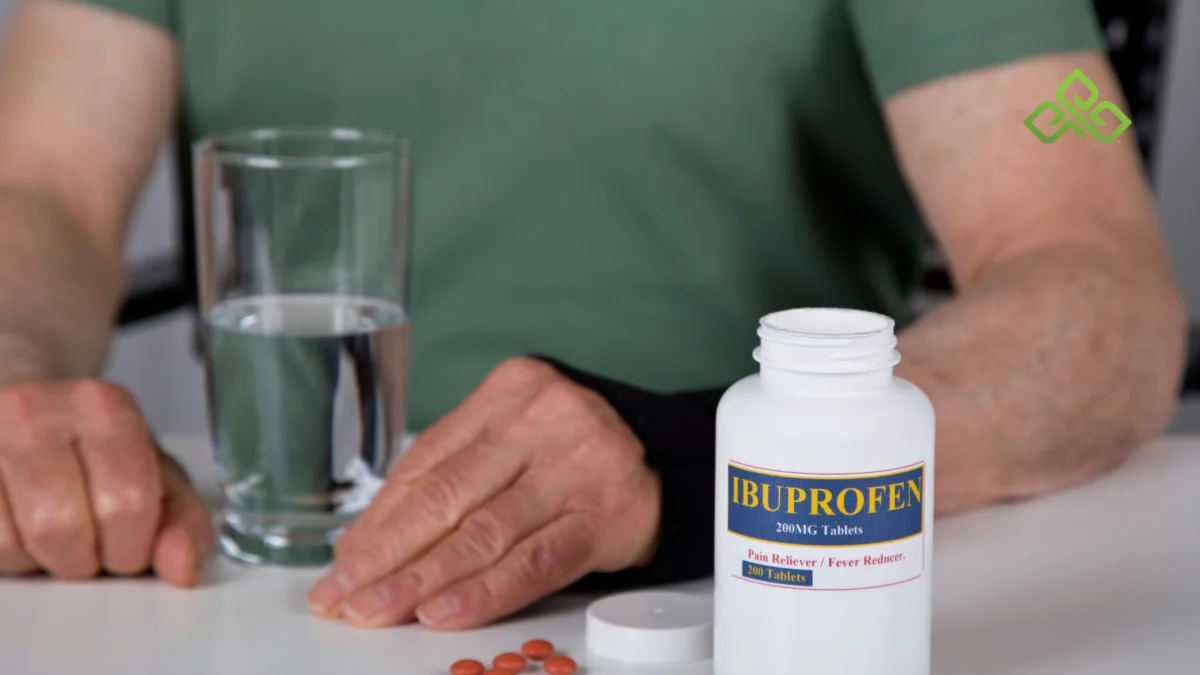
No published study has measured ibuprofen blood levels in people using cannabis. Anyone quoting you a precise number for that specific pairing is inventing it. What does exist is a randomized, double blind crossover trial in 18 healthy adults that measured the liver enzyme ibuprofen depends on, and its result is not the one most patients expect: the effect tracked the cannabidiol content of the product, not the THC. Here is what the evidence supports, and exactly where it runs out.
Can You Take Weed and Ibuprofen Together?
There is no documented clinically significant interaction between cannabis and ibuprofen, and there is also no study that has looked directly. Those are two different statements and the difference matters.
What is known is that both ibuprofen and the cannabinoids are handled by an overlapping set of liver enzymes, and that in the one controlled human experiment on the relevant enzyme, a high dose cannabidiol product produced a substantial effect while a THC product did not. That is a reason to mention cannabis to the physician managing your pain treatment. It is not a reason to expect a dangerous reaction from an occasional ibuprofen tablet.
How Is Ibuprofen Broken Down in the Body?
Ibuprofen is cleared primarily by the liver enzyme CYP2C9, with a secondary contribution from CYP2C8. This is the fact that makes the question worth asking at all. If ibuprofen were cleared by some enzyme cannabinoids never touch, there would be no mechanism to discuss.
CYP2C9 is a heavily studied enzyme because a number of narrow margin drugs run through it, warfarin being the most familiar. When something slows CYP2C9 down, drugs that depend on it accumulate.
Do Cannabinoids Block the Enzyme That Clears Ibuprofen?
In a test tube, yes, and more potently than most people assume.
Researchers measured the binding corrected inhibitory potency of the major cannabinoids against CYP2C9 and reported values of 0.012 micromolar for THC and 0.17 micromolar for cannabidiol, alongside 0.43 micromolar for the THC metabolite 11-hydroxy-THC. The carboxy-THC metabolite, which is the one urine drug tests detect, showed no appreciable inhibition at the concentrations tested. All of the inhibition observed was reversible. None of the compounds permanently inactivated the enzyme.
Read those two numbers carefully, because they set up the surprise in the next section. On potency alone, THC is the stronger CYP2C9 inhibitor of the two.
What Happened When Researchers Tested This in People?
The same research group ran the human experiment. Eighteen healthy adults, 11 men and 7 women with a mean age of 30, received cannabinoids baked into a brownie in a randomized, double blind, crossover design. There were three conditions: a cannabidiol dominant brownie containing 640 mg cannabidiol plus 20 mg THC, a THC dominant brownie containing 20 mg THC and no cannabidiol, and a placebo.
Enzyme activity was measured using a validated probe cocktail. Losartan served as the CYP2C9 probe, which is the enzyme that matters for ibuprofen.
The cannabidiol dominant brownie increased losartan exposure and peak concentration by 63 to 77 percent, and reduced the ratio of losartan's metabolite to parent drug by 30 percent. Both changes point the same direction: the enzyme was slowed. The authors concluded that cannabidiol produced reversible CYP2C9 inhibition acting mainly on first pass metabolism, and that the finding supports dose adjustment guidance for drugs that depend on that enzyme.
Why Does CBD Matter More Than THC Here?
Because potency and dose are different things, and dose won.
THC was the more potent inhibitor in the test tube, but the products people actually consume do not deliver THC at anything like the concentration a 640 mg cannabidiol dose delivers cannabidiol. The modeling work from the same group makes the point explicitly: oral cannabidiol was predicted to produce strong CYP2C9 interactions across its entire realistic dose range, from 70 mg to 2000 mg, while oral THC was predicted to reach that threshold only at doses of roughly 130 to 160 mg. Twenty milligrams of THC is a meaningful recreational or therapeutic dose. It is nowhere near 130.
The practical translation is counterintuitive and worth stating plainly. If you are taking ibuprofen regularly and you are worried about an enzyme interaction, the number to look at on the product label is the cannabidiol content, not the THC content. A high cannabidiol tincture or a pharmaceutical grade cannabidiol product is the more plausible concern. A low dose THC product is the less plausible one.
Has Anyone Actually Measured Ibuprofen With Cannabis?
No, and this is the honest limit of everything above.
The human trial measured losartan, a blood pressure medication used here as a laboratory probe. The modeling paper used diclofenac, a different NSAID, as its worked example. Ibuprofen was not the subject of either. It shares the CYP2C9 pathway with both, which is why the question is reasonable, but sharing a pathway is a reason to ask rather than an answer.
A published evaluation of drug interactions with medical cannabis identified 20 drug classes with documented interactions. Anti-inflammatory agents were not among them. That absence is not reassurance and it is not alarm. It is a gap.
Does Cannabis Make Ibuprofen Stomach Bleeding More Likely?
This claim circulates widely, usually phrased as the idea that cannabis and NSAIDs both act on prostaglandin pathways and therefore stack their gastrointestinal risk. No primary source supporting it turned up in this research, and the systematic reviews that would be the natural place for such a finding do not cover NSAIDs at all.
Treat it as unverified. It is mechanistically speculative rather than measured, and repeating it as fact would overstate what is actually known.
What Actually Raises Your Risk on Ibuprofen?
Ibuprofen itself, which is the part of this topic with real evidence behind it.
NSAIDs carry well documented risks that have nothing to do with cannabis: gastrointestinal bleeding and ulceration, kidney injury with sustained use or dehydration, elevated blood pressure, and cardiovascular risk. Those risks scale with dose and duration. A patient taking ibuprofen daily for chronic pain over months or years is carrying meaningfully more of that exposure than someone taking it twice a year for a headache.
If you are in the first group, the conversation worth having with a physician is broader than cannabis. It is about whether a long term daily NSAID is the right foundation for your pain treatment at all.
Does Your Genetics Change This?
It may. CYP2C9 comes in reduced function variants that are common in the general population, and people carrying them clear ibuprofen more slowly at baseline. A published case report describes ibuprofen associated upper gastrointestinal toxicity in a patient carrying non functional variants of both CYP2C9 and CYP2C8, and separate work has documented that carriers of reduced metabolism versions of these genes self adjust their ibuprofen dosing.
The relevance to cannabis is a margin argument rather than a new mechanism. Someone who already clears ibuprofen slowly has less headroom if a high cannabidiol product slows the same enzyme further. Nobody has measured that combination, so this stays a reason for a conversation, not a prediction.
Why Does the Ibuprofen Label Not Mention Cannabis?
Because no dedicated interaction study exists to put there. Drug label interaction sections are assembled from formal studies, and none has been conducted for cannabis with ibuprofen.
This is the same pattern that shows up across the cannabis interaction literature. Absence of a warning is not evidence of absence of an interaction. It usually means the study has not been run.
What Should You Tell Your Physician?
Bring three specifics rather than the word "cannabis."
Bring the cannabidiol milligrams in whatever you use, because that is the number the human data actually implicates. Bring the THC milligrams as well. Bring how much ibuprofen you take and how often, because a daily regimen and an occasional tablet are different clinical situations. If you know you carry a reduced function CYP2C9 variant from prior pharmacogenetic testing, say so.
Is Chronic Pain a Qualifying Condition in Florida, Georgia, or Texas?
Yes, in all three programs. Chronic pain qualifies in Florida, in the Georgia registry, and under the Texas Compassionate Use Program.
That is relevant here because of who tends to be reading this. The person asking whether cannabis interacts with their ibuprofen is very often someone taking ibuprofen daily for a pain condition, and daily long term NSAID use is precisely the situation where a physician may want to discuss what else is available.
What This Means for Florida, Georgia, and Texas Patients
Miracle Leaf® physicians evaluate patients in all three states, and a medication list is part of that evaluation. An NSAID is not a barrier to certification in any of them, and it is not a question the evaluation is designed to catch you out on. It is information the physician uses.
The state programs and their condition lists differ, and the pages for Florida marijuana laws, Georgia marijuana laws, and Texas marijuana laws cover each one. Chronic pain eligibility specifically is on the chronic pain page, and the Florida, Georgia, and Texas program pages cover how certification works in each state.
What If You Live Outside Florida, Georgia, and Texas?
Miracle Leaf® operates clinics in Florida, Georgia, and Texas, and offers telehealth evaluations in a number of additional states. The telehealth page covers which states are served and how an online evaluation works. If your state is not covered, the states where cannabis is legal post covers the national picture.
Sources for Cannabis and NSAID Interactions
- Evaluation of Cytochrome P450-Mediated Cannabinoid-Drug Interactions in Healthy Adult Participants. Bansal S, et al. Clin Pharmacol Ther. 2023;114(3):693 to 703. doi:10.1002/cpt.2973. PMCID PMC11059946. Source of the crossover design, the 18 participant demographics, the 640 mg cannabidiol and 20 mg THC doses, the losartan CYP2C9 probe result of 63 to 77 percent, the 30 percent metabolite ratio reduction, and the first pass conclusion.
- Predicting the Potential for Cannabinoids to Precipitate Pharmacokinetic Drug Interactions via Reversible Inhibition or Inactivation of Major Cytochromes P450. Bansal S, Maharao N, Paine MF, Unadkat JD. Drug Metab Dispos. 2020;48(10):1008 to 1017. doi:10.1124/dmd.120.000073. PMCID PMC7543485. Source of the CYP2C9 inhibitory potency values for THC, cannabidiol and 11-hydroxy-THC, the reversible-only finding, and the predicted oral dose thresholds using diclofenac as the example substrate.
- Evaluation of potential drug-drug interactions with medical cannabis. Source of the 20 drug classes reviewed and the absence of anti-inflammatory agents from that list.
- Association of CYP2C9*3 and CYP2C8*3 Non-Functional Alleles with Ibuprofen-Induced Upper Gastrointestinal Toxicity in a Saudi Patient. Source of the case report linking reduced function CYP2C9 and CYP2C8 variants to ibuprofen gastrointestinal toxicity.
- Individuals with CYP2C8 and CYP2C9 reduced metabolism haplotypes self-adjusted ibuprofen dose in the Coriell Personalized Medicine Collaborative. Source of the finding that carriers of reduced metabolism haplotypes adjust their own ibuprofen dosing.
Related Health and Eligibility Resources
- The cannabis drug interactions hub covers which interactions are documented and which are repeated without evidence; NSAIDs sit inside a wider CYP450 picture.
- The cannabis and Xanax post covers benzodiazepines, where the mechanism is additive sedation rather than a shared clearance enzyme.
- The cannabis and antidepressants post covers SSRIs and SNRIs, which raise a different set of enzyme questions.
- The cannabis and alcohol post covers the co-use question that comes up most often alongside this one.
- The chronic pain page covers eligibility in all three state programs.
- The qualifying conditions page covers the full condition list per state.
- The Tylenol and weed post covers acetaminophen, where the question is hepatic rather than the CYP2C9 pathway described here.
Talk to a Physician About Your Medication List
Bring the cannabidiol and THC milligrams, and bring how much ibuprofen you actually take. It changes the evaluation, and in some cases it changes what the physician recommends.
Call (833) LEGAL-MJ or contact us online to book. Evaluation pricing is on the pricing page, and the clinicians who review this content are listed on the editorial team page.
Disclaimer
This post is informational and is not medical advice. No published study has measured ibuprofen blood levels in people using cannabis. The human pharmacokinetic figures cited here are for losartan, a laboratory probe drug for the CYP2C9 enzyme, measured in healthy volunteers at a pharmaceutical cannabidiol dose, and the modeling predictions used diclofenac rather than ibuprofen. The enzyme inhibition potency values are in vitro measurements and do not translate directly to blood levels in a person. The claim that cannabis increases NSAID gastrointestinal bleeding risk is presented here as unverified because no primary source supporting it was identified. Ibuprofen carries its own documented gastrointestinal, renal and cardiovascular risks independent of cannabis. Do not start, stop or change a prescribed or over the counter medication based on this article. Discuss cannabis use with the physician who manages your pain treatment.
Common questions
Frequently asked questions
Can you take ibuprofen and cannabis at the same time?
Which part of cannabis actually matters for ibuprofen?
Has anyone measured ibuprofen levels in people using cannabis?
Does cannabis make ibuprofen stomach bleeding more likely?
Why does the ibuprofen label say nothing about marijuana?
Does genetics change how ibuprofen and cannabis interact?
Is chronic pain a qualifying condition in Florida, Georgia, or Texas?
Ready to talk with a Miracle Leaf® physician?
Reviewed by Miracle Leaf® Editorial Team. This article is for general education and is updated when the underlying law or clinical guidance materially changes.