Miracle Leaf® Blog
States Where Cannabis Is Legal in 2026
Cannabis is legal for medical use in 41 states and the District of Columbia, and for adult recreational use in 24 states and DC. Eight more states allow only low THC or CBD products, and Idaho has no cannabis access law of any kind. Federal law changed in April 2026, when state licensed medical marijuana moved to Schedule III while everything outside that system stayed in Schedule I. Here is the full 50 state picture, what actually changed this year, and where to start if you need a physician.
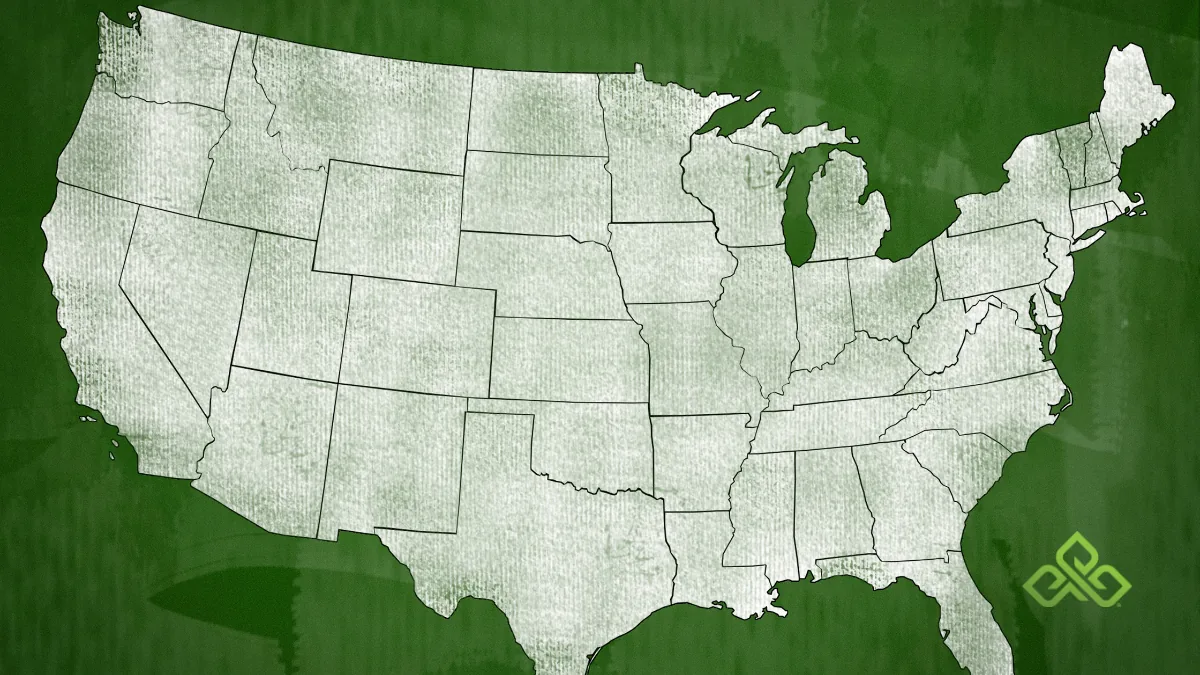
Search this question and you will get a number, but rarely the right one, because "legal" describes four different things. Cannabis is legal for medical use in 41 states and the District of Columbia, and for adult recreational use in 24 states and DC. Eight more states allow only low THC or CBD products. One state, Idaho, allows nothing. Here is the full picture, state by state.
How Many States Have Legalized Cannabis in 2026?
Forty-one states and DC run comprehensive medical cannabis programs. Twenty-four of those states, plus DC, also allow adult recreational use. Eight states have only limited low THC or CBD laws, and Idaho has no cannabis access law of any kind.
Those four buckets come from the National Conference of State Legislatures, which classifies a program as comprehensive only if it protects patients from criminal penalties, provides actual access through dispensaries or home cultivation, allows a variety of products rather than low THC formulations only, permits smoking or vaporization, and is not a limited trial program.
The arithmetic closes cleanly, which is a useful check on any number you see quoted:
- 41 states with comprehensive medical programs
- 8 states with low THC or CBD laws only
- 1 state with neither
- 50 states total
Within the 41, 24 states have also legalized adult use and 17 have medical access only.
Which States Allow Cannabis? The Full 50 State Table
The table below gives program status for every state and DC, plus where to start if you are looking for a certifying physician. Miracle Leaf® operates clinics in Florida, Georgia and Texas; other states route to our telehealth program information.
| State | Medical program | Adult use | Where to start |
|---|---|---|---|
| Alabama | Comprehensive | No | Telehealth eligibility |
| Alaska | Comprehensive | Yes | Telehealth eligibility |
| Arizona | Comprehensive | Yes | Telehealth eligibility |
| Arkansas | Comprehensive | No | Arkansas |
| California | Comprehensive | Yes | California |
| Colorado | Comprehensive | Yes | Telehealth eligibility |
| Connecticut | Comprehensive | Yes | Connecticut |
| Delaware | Comprehensive | Yes | Telehealth eligibility |
| District of Columbia | Comprehensive | Yes | Telehealth eligibility |
| Florida | Comprehensive | No | Florida program |
| Georgia | Comprehensive | No | Georgia program |
| Hawaii | Comprehensive | No | Telehealth eligibility |
| Idaho | None | No | Telehealth eligibility |
| Illinois | Comprehensive | Yes | Telehealth eligibility |
| Indiana | Low THC or CBD only | No | Telehealth eligibility |
| Iowa | Low THC or CBD only | No | Iowa |
| Kansas | Low THC or CBD only | No | Telehealth eligibility |
| Kentucky | Comprehensive | No | Kentucky |
| Louisiana | Comprehensive | No | Louisiana |
| Maine | Comprehensive | Yes | Maine |
| Maryland | Comprehensive | Yes | Maryland |
| Massachusetts | Comprehensive | Yes | Massachusetts |
| Michigan | Comprehensive | Yes | Michigan |
| Minnesota | Comprehensive | Yes | Minnesota |
| Mississippi | Comprehensive | No | Telehealth eligibility |
| Missouri | Comprehensive | Yes | Missouri |
| Montana | Comprehensive | Yes | Montana |
| Nebraska | Comprehensive | No | Telehealth eligibility |
| Nevada | Comprehensive | Yes | Nevada |
| New Hampshire | Comprehensive | No | Telehealth eligibility |
| New Jersey | Comprehensive | Yes | New Jersey |
| New Mexico | Comprehensive | Yes | New Mexico |
| New York | Comprehensive | Yes | New York |
| North Carolina | Low THC or CBD only | No | Telehealth eligibility |
| North Dakota | Comprehensive | No | Telehealth eligibility |
| Ohio | Comprehensive | Yes | Ohio |
| Oklahoma | Comprehensive | No | Oklahoma |
| Oregon | Comprehensive | Yes | Telehealth eligibility |
| Pennsylvania | Comprehensive | No | Pennsylvania |
| Rhode Island | Comprehensive | Yes | Rhode Island |
| South Carolina | Low THC or CBD only | No | Telehealth eligibility |
| South Dakota | Comprehensive | No | Telehealth eligibility |
| Tennessee | Low THC or CBD only | No | Telehealth eligibility |
| Texas | Comprehensive | No | Texas program |
| Utah | Comprehensive | No | Telehealth eligibility |
| Vermont | Comprehensive | Yes | Telehealth eligibility |
| Virginia | Comprehensive | Yes | Virginia |
| Washington | Comprehensive | Yes | Telehealth eligibility |
| West Virginia | Comprehensive | No | Telehealth eligibility |
| Wisconsin | Low THC or CBD only | No | Telehealth eligibility |
| Wyoming | Low THC or CBD only | No | Telehealth eligibility |
Program classification follows the NCSL state medical cannabis law tables. Telehealth certification is not permitted in every state, including several that have legalized adult use, so the eligibility page is the accurate starting point rather than an assumption that legal access means an online visit.
Which States Have Legalized Recreational Cannabis?
Twenty-four states and the District of Columbia allow adult recreational use: Alaska, Arizona, California, Colorado, Connecticut, Delaware, Illinois, Maine, Maryland, Massachusetts, Michigan, Minnesota, Missouri, Montana, Nevada, New Jersey, New Mexico, New York, Ohio, Oregon, Rhode Island, Vermont, Virginia and Washington.
One pattern is worth noticing. Every adult use state also runs a medical program, and every one of them had the medical program first. Medical legalization has consistently preceded adult use rather than replacing it, which is why the medical programs in those states did not close when recreational sales began.
The routes differ by state. Some legalized by citizen ballot initiative, such as Arizona Proposition 207 in 2020 and Missouri Amendment 3 in 2022. Others legalized by statute, such as Connecticut SB 1201 in 2021 and Minnesota HF 100 in 2023. That distinction matters more than it looks: a program created by constitutional amendment is harder for a later legislature to narrow than one created by ordinary statute.
Which States Have Medical Cannabis but Not Recreational?
Seventeen states run a comprehensive medical program without adult use legalization: Alabama, Arkansas, Florida, Georgia, Hawaii, Kentucky, Louisiana, Mississippi, Nebraska, New Hampshire, North Dakota, Oklahoma, Pennsylvania, South Dakota, Texas, Utah and West Virginia.
This is the group where a physician certification is the only lawful route to cannabis, and it includes all three states where Miracle Leaf® clinics operate. In an adult use state, a patient who cannot get certified still has a legal option. In these seventeen, the certification is the option.
Which States Have Only Low THC or CBD Laws?
Eight states permit only low THC or high CBD products, generally for a short list of conditions and sometimes only as a legal defense rather than a working supply program: Indiana, Iowa, Kansas, North Carolina, South Carolina, Tennessee, Wisconsin and Wyoming.
The thresholds are restrictive and vary widely. Indiana requires at least 5 percent CBD by weight and no more than 0.3 percent THC. North Carolina and South Carolina set their ceilings at 0.9 percent THC. Tennessee limits its cannabis oil provision to a clinical research context. Wisconsin defines its allowance as cannabidiol in a form without psychoactive effect and does not specify numeric limits at all.
Iowa is the clearest illustration of why counting these states as "legal" misleads people. Iowa runs a medical cannabidiol program under Iowa Code chapter 124E with real registered patients and licensed dispensaries, and it still caps purchases at 4.5 grams of total THC per 90 day period, prohibits smokable flower, and offers no home cultivation and no out of state reciprocity. It is a genuine program. It is not a comprehensive one, and a patient who moves there from a comprehensive state will notice within a week.
Which States Have No Medical Cannabis Program at All?
Idaho. It is the only state with no comprehensive program and no low THC or CBD law, appearing in neither NCSL table.
For a patient, this is the practically important category, and it is a single state. In the other 49, some lawful pathway exists, even if it is narrow enough that it may not cover a given condition. In Idaho, no certification exists to seek.
Is Marijuana Still Illegal Under Federal Law?
Partly. As of April 28, 2026, FDA approved marijuana drug products and products covered by a state medical marijuana license sit in Schedule III of the Controlled Substances Act. Marijuana outside those systems remains in Schedule I.
This is the most significant federal change in decades, and it is narrower than most coverage of it suggested. The final rule at 91 FR 22714, issued under Attorney General Order 6754-2026 and effective the day it published, applies to "marijuana, extracts, and compounds derived from the marijuana plant included in FDA-approved drugs or covered by state medical marijuana licenses." It also establishes an expedited registration process for entities holding a state medical marijuana license.
What it does not do is reschedule marijuana generally. That question is still open. A separate notice at 91 FR 22777, under Docket DEA-1362, set a hearing on the broader rescheduling proposal to begin June 29, 2026, following the notice of proposed rulemaking originally published May 21, 2024. A review of every Drug Enforcement Administration scheduling document published in the Federal Register during 2026 shows no final rule on general marijuana rescheduling as of publication of this article.
Two consequences follow for patients, and they point in different directions:
- A state licensed medical program now sits in a different federal schedule than the adult use market next door. That is a distinction between medical and recreational access that did not exist before April 2026.
- Schedule III is not legalization. It does not create a federal right to possess or use cannabis, and it does not change state law in any of the states above.
What Changed in State Cannabis Law in 2026?
One state. Georgia enacted SB 220, effective July 1, 2026, which the Marijuana Policy Project describes as strengthening the state low THC program into a full medical cannabis law. No state legalized adult use in 2026.
That is a genuinely unusual result. Legalization and decriminalization bills were introduced in more than a dozen states during the 2026 sessions and did not pass. If you are comparing articles and one says the count changed this year, check its date: the 24 state adult use total has held since 2023, when Delaware, Minnesota and Ohio were the most recent states to legalize.
Florida is the case most people ask about, and the answer moved further out rather than closer. The Florida Division of Elections constitutional initiatives database now lists initiative 25-01, Adult Personal Use of Marijuana, sponsored by Smart and Safe Florida, under the 2028 general election rather than 2026.
Does Legal Always Mean Available?
No, and this is the gap that catches patients. A state can have a lawful program on the books while no dispensary is open to serve it.
Nebraska is the current example. Voters approved medical cannabis in 2024, and NCSL classifies the resulting program as comprehensive. The Nebraska Medical Cannabis Commission was still building the supply chain well into 2026: its application period for manufacturing licenses ran from June 24 to July 20, 2026, and the commission states that its "current emergency regulations are in the process of being formalized following a public rulemaking process."
So before you count on access, confirm three separate things rather than one:
- Is there a program? The table above answers this.
- Is it operating? Check the state agency for licensed dispensaries, not the statute.
- Does your condition qualify? Qualifying condition lists vary sharply between states and are the most common reason an otherwise eligible patient is turned down.
Do You Still Need a Medical Card in a Recreational State?
Frequently, yes. Adult use legalization does not make the medical program redundant, which is why none of the 24 states closed theirs.
The practical differences typically include lower minimum age, higher possession and purchase limits, different tax treatment, and access to product forms or dosages the adult use market does not carry. There is now a federal difference as well: the April 2026 Schedule III rule reaches products covered by a state medical marijuana license, and the adult use market sits outside that.
This article does not cover how to get certified, because the requirements are state specific. Each state page linked in the table above covers its own process.
What Is the Program Status in Florida, Georgia, and Texas?
All three are medical only. None has legalized adult recreational use, and in all three a physician certification or prescription is the sole lawful route.
Florida allows medical use under Amendment 2, approved in 2016. Adult use is not legal. A 2024 ballot amendment did not reach the 60 percent of votes cast that Article XI, Section 5 of the Florida Constitution requires, and the successor initiative is now docketed for 2028. For a patient, the practical reading is that the medical program is the only route in Florida for the foreseeable future. See the Florida program hub and Florida marijuana laws.
Georgia was the one state to change its law in 2026. Under SB 220, effective July 1, 2026, the Georgia Department of Public Health now allows qualifying patients and caregivers to possess up to 12,000 milligrams of THC, and states that "annual physician certification is the only way patients can access medical cannabis in the state." See the Georgia program hub and Georgia marijuana laws.
Texas runs the Compassionate Use Program under Health and Safety Code chapter 487. HB 46 of the 89th Legislature, signed June 20, 2025 and effective September 1, 2025, expanded it. The Texas Department of Public Safety states it will issue 15 total licenses, adding 12 to the 3 then active, and that dispensing organizations may open satellite locations within public health regions. Texas issues no card and charges no patient fee; access runs through a prescription entered in the state registry. See the Texas program hub and Texas marijuana laws.
Miracle Leaf physicians certify patients in all three states. Whether a specific diagnosis qualifies is a separate question from whether the state has a program, and it is decided at the evaluation against that state published condition list.
What If You Live Outside Florida, Georgia, or Texas?
Start with the telehealth eligibility guide, which shows what is available in your state rather than what is legal there.
Those are different questions. Some states with fully legal medical programs still prohibit certifying a patient over telehealth, or permit it for renewals but not first certifications. Arkansas is a clean example: renewals may run by telehealth, first certifications may not. Iowa permits telehealth subject to specific Board of Medicine telemedicine standards. Several states bar telehealth certification outright.
The state guides linked in the table cover 22 states in detail, including the statutory basis for each answer. If your state is not among them, the eligibility guide will tell you where it stands.
How Current Is This Page?
Last verified: August 15, 2026.
State cannabis law changes faster than almost any other area of law. Every classification above traces to the sources listed below, and every count comes from the underlying state tables rather than a summary figure.
Two specific things to re-check before relying on this page later: whether the Drug Enforcement Administration has issued a final rule on general marijuana rescheduling, which was still pending at publication, and whether any state changed status in a legislative session or ballot measure after this date. If you find a discrepancy, the state agency page is the authority, not this article.
Sources for State Cannabis Legal Status
- State Medical Cannabis Laws, National Conference of State Legislatures. Source for comprehensive program classification, adult use status, low THC and CBD program tables, and the state by state statutory and ballot measure citations used above.
- Schedules of Controlled Substances: Rescheduling of FDA Approved Products Containing Marijuana From Schedule I to Schedule III, 91 FR 22714. Final rule, Attorney General Order 6754-2026, effective April 28, 2026.
- Schedules of Controlled Substances: Rescheduling of Marijuana, 91 FR 22777. Notice of hearing on proposed rulemaking, Docket DEA-1362, hearing beginning June 29, 2026.
- Georgia Department of Public Health medical cannabis registry. Source for the 12,000 milligram THC possession limit and the annual certification requirement.
- Texas HB 46, 89th Legislature Regular Session. Bill history, signed June 20, 2025, effective September 1, 2025.
- Texas Department of Public Safety, 89th Legislation. Agency summary of Compassionate Use Program licensing changes.
- Florida Constitution, Article XI. Section 5 sets the 60 percent approval threshold for constitutional amendments.
- Florida Division of Elections, constitutional initiatives database. Source for the status and election year of initiative 25-01, Adult Personal Use of Marijuana.
- Nebraska Medical Cannabis Commission. Source for licensing timeline and regulatory status.
- Key Marijuana Policy Reform Legislation, Marijuana Policy Project. Source for 2026 enactments and the characterization of Georgia SB 220.
Related Legal and Eligibility Resources
- The telehealth program covers the 22 states where we publish a detailed state guide, and the eligibility section covers the rest.
- The qualifying conditions page covers eligibility across the three state programs where our clinics operate.
- The Florida marijuana laws, Georgia marijuana laws and Texas marijuana laws pages cover each program in depth, including possession limits and program rules.
- The medical marijuana dispensaries in Texas post covers where a Texas prescription is actually filled.
- The flying with medical marijuana post covers what happens when you cross a state line, which is the question most readers of this page ask next.
- The delta-8, delta-9 and THCA in Florida post covers how hemp derived compounds sit outside the state legality map entirely.
- The Florida card for seasonal residents post covers what part time residency means for a state program that has no reciprocity.
Find Out Where You Stand in Florida, Georgia, or Texas
Miracle Leaf physicians evaluate patients for the state medical cannabis programs in Florida, Georgia and Texas. Having a program in your state is the first question. Whether your diagnosis qualifies under that state list is the second, and it is the one that decides the outcome.
Call (833) LEGAL-MJ or contact us online to book. Evaluation pricing is on the pricing page. If you live outside these three states, start with the telehealth eligibility guide.
Disclaimer
This post is informational and is not legal or medical advice. State cannabis law changes frequently, and the classifications above reflect the sources cited as of the last verified date. Program status is not the same as eligibility: having a comprehensive program in your state does not mean your condition qualifies, and qualifying condition lists differ substantially between states. Federal law continues to prohibit marijuana outside the narrow categories placed in Schedule III by the April 2026 final rule, and rescheduling of marijuana generally remained pending at publication. Nothing here authorizes possession, use or transport of cannabis in any state, and cannabis remains unlawful to carry across state lines regardless of the status of either state. Consult a licensed physician about your own care and a licensed attorney about your own legal exposure.
Common questions
Frequently asked questions
How many states is weed legal in?
Which states have legalized recreational marijuana?
Is marijuana legal under federal law in 2026?
Which states have no medical marijuana program?
Is recreational marijuana legal in Florida?
Did any state legalize cannabis in 2026?
Do you still need a medical card in a state where recreational is legal?
Ready to talk with a Miracle Leaf® physician?
Reviewed by Miracle Leaf® Editorial Team. This article is for general education and is updated when the underlying law or clinical guidance materially changes.