
Miracle Leaf® Blog
Weed and Alcohol: Impairment, THC Levels, and Driving
Drinking alcohol alongside cannabis is not simply doing two things at once. In controlled dosing studies, alcohol significantly raised peak blood THC, and at the higher cannabis dose it raised it by more than half. On the road the two combine worse than either alone: in a case control study of fatally injured drivers, testing positive for both carried an adjusted odds ratio of 25.09 against 16.33 for alcohol alone and 1.54 for cannabis alone. Here is what the pharmacology shows, how strong the crash evidence actually is, and what the driving law says in Florida, Georgia, and Texas.
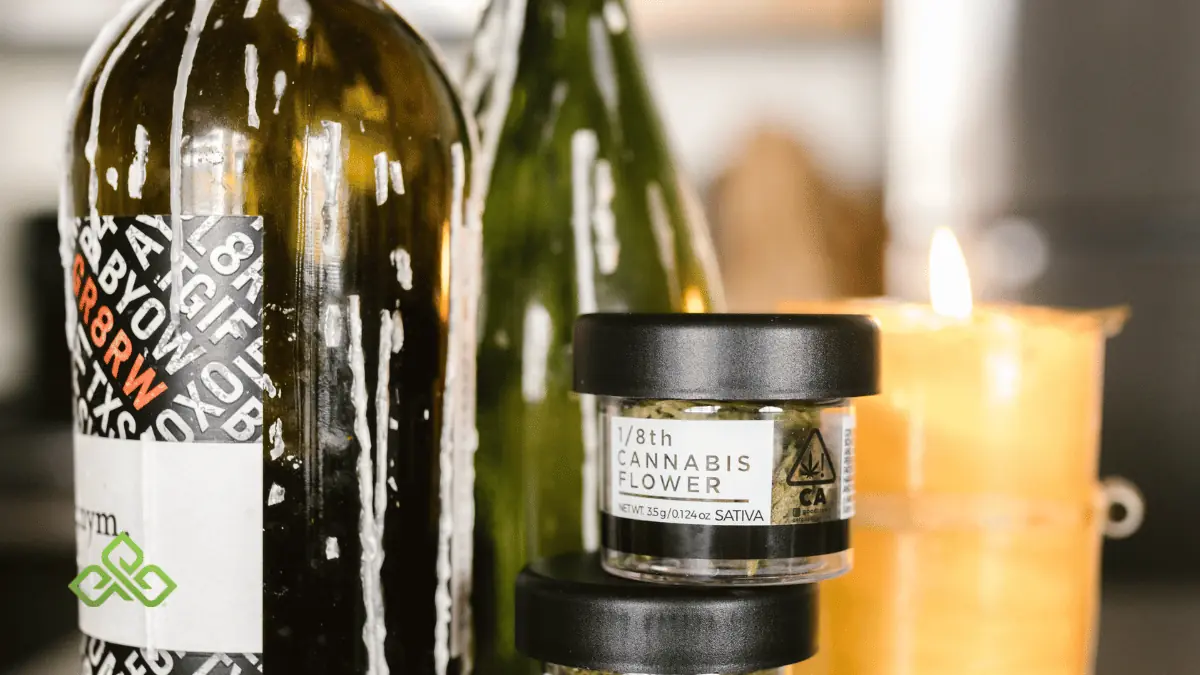
Mixing weed and alcohol is not the same as doing two things at once. In controlled dosing, alcohol significantly raised peak blood THC, and at the higher cannabis dose it raised it by roughly 60 percent. On the road the two compound. In a case control study of fatally injured drivers, testing positive for both carried an adjusted odds ratio of 25.09, against 16.33 for alcohol alone and 1.54 for cannabis alone. Here is what the pharmacology shows, how strong that crash evidence actually is, and what the driving law says in Florida, Georgia, and Texas.
What Happens When You Mix Weed and Alcohol?
Two separate things happen, and they compound each other.
The first is pharmacokinetic. Drinking alcohol alongside cannabis significantly raises peak blood THC concentrations, so the same cannabis dose delivers more drug than it would sober. The second is performance related. Both substances degrade driving ability on their own, and in crash data the pair is associated with risk beyond what adding the two separately would predict.
The scale of the overlap is worth stating first. In the 2024 National Survey on Drug Use and Health, 46.6 percent of people aged 12 or older, or 134.3 million people, drank alcohol in the past month. Past month marijuana use was 15.4 percent, or 44.3 million people, and past year use was 22.3 percent, or 64.2 million. Those populations overlap heavily, which is why the interaction matters clinically rather than as a curiosity.
Does Drinking Alcohol Raise Your Blood THC Level?
Yes. It was measured directly, and the difference was statistically significant.
A controlled study published in Clinical Chemistry in 2015 dosed participants with vaporized cannabis at a low or high dose, with or without oral low dose alcohol, and sampled blood. Median peak blood concentrations came out as follows:
| Cannabis dose | Peak blood THC, no alcohol | Peak blood THC, with alcohol |
|---|---|---|
| Low | 32.7 micrograms per liter | 35.3 micrograms per liter |
| High | 42.2 micrograms per liter | 67.5 micrograms per liter |
The same pattern held for 11-hydroxy-THC, the active metabolite: 2.8 rising to 3.7 micrograms per liter at the low dose, and 5.0 rising to 6.0 at the high dose. Both cannabinoids reached significantly higher peaks when alcohol was present.
Look at the shape of that table rather than only the numbers. At the low cannabis dose the difference is modest. At the high dose, peak blood THC with alcohol was roughly 60 percent higher than without it. The bigger the cannabis dose, the more alcohol appears to matter.
The authors' stated conclusion was cautious and worth quoting as they wrote it: the significantly higher blood THC and 11-hydroxy-THC peak values with alcohol possibly explain increased performance impairment observed from cannabis and alcohol combinations.
How Much Does Each One Impair Driving?
Both degrade lane control, and in one simulator study the effects added together rather than multiplying.
A double blind, placebo controlled driving simulator study published in Drug and Alcohol Dependence in 2015 ran 18 occasional cannabis smokers through six conditions: placebo, low dose cannabis at 2.9 percent THC, or high dose at 6.7 percent THC, each with placebo alcohol or with alcohol dosed to a peak breath alcohol concentration of about 0.065.
The outcome measure was standard deviation of lateral position, which is the technical term for weaving within the lane:
| Condition | Lane position variability |
|---|---|
| Placebo cannabis, placebo alcohol | 28.8 cm |
| Low dose cannabis, placebo alcohol | 31.3 cm |
| High dose cannabis, placebo alcohol | 31.2 cm |
| Placebo cannabis, alcohol | 32.3 cm |
| Low dose cannabis, alcohol | 34.2 cm |
| High dose cannabis, alcohol | 32.2 cm |
Two things in that table deserve comment, and most summaries skip the second one. The combination conditions sit at the top, which is the expected result. But the high dose cannabis plus alcohol condition came in lower than the low dose plus alcohol condition, which is not what a simple dose response would produce. That is why the authors' primary analysis modeled measured blood THC concentration and measured breath alcohol rather than assigned dose. Inhaled dose and resulting blood concentration are not the same variable.
The concentration model produced the useful numbers: lane position variability increased by 0.26 cm per microgram per liter of blood THC and 0.42 cm per 0.01 grams per 210 liters of breath alcohol. From that relationship, the authors calculated that 8.2 micrograms per liter of blood THC during the drive produced an increase similar to a 0.05 breath alcohol concentration, and 13.1 micrograms per liter approximated 0.08.
Their finding on how the two interact was specific: combining alcohol and cannabis produced an additive effect on lane position, not a synergistic one, with no significant interaction term.
How Much Does Using Both Increase Crash Risk?
More than the simulator work alone would suggest. In fatal crash data, the combination outruns the sum of its parts.
A case control study published in Injury Epidemiology in 2017 compared 1,944 fatally injured drivers with drug testing results in the Fatality Analysis Reporting System against 7,719 drivers from the 2007 National Roadside Survey. Cases were matched to the survey windows by time of day and day of week. Against drivers who tested negative for both substances, the adjusted odds ratios of fatal crash involvement were:
| Test result | Adjusted odds ratio | 95% confidence interval |
|---|---|---|
| Alcohol positive, marijuana negative | 16.33 | 14.23 to 18.75 |
| Marijuana positive, alcohol negative | 1.54 | 1.16 to 2.03 |
| Both positive | 25.09 | 17.97 to 35.03 |
The authors' conclusion was that alcohol and marijuana are each associated with significantly increased risk of fatal crash involvement, and that when used together there is a positive synergistic effect on fatal crash risk on the additive scale. The relative excess risk due to interaction was 2.94, with a 95 percent confidence interval of 0.60 to 5.28, and the synergy index at a blood alcohol concentration of 0.08 or above was 1.55.
Set that against the simulator result and the tension is real rather than a contradiction to be smoothed over. Lane weaving in a simulator behaved additively. Fatal crash involvement in the field did not. Those are different outcomes measured in different populations under different conditions, and a driver's real world risk is built from far more than lane position: reaction time, decision making, speed choice, and the willingness to drive at all.
Why Do Cannabis Crash Numbers Shrink When Alcohol Is Controlled For?
Because a large share of the apparent cannabis effect in observational data belongs to alcohol.
The National Academies 2017 review of cannabis health effects reports a meta-analysis by Rogeberg and Elvik in which the pooled odds ratio for cannabis use and motor vehicle crash risk was 1.79, with a 95 percent confidence interval of 1.28 to 2.51, in an analysis that did not account for alcohol intoxication. Once alcohol was accounted for, the same association weakened to 1.11, with a confidence interval of 1.04 to 1.18. A second estimation method gave 1.69 unadjusted and 1.18 adjusted.
The committee's own graded finding on the underlying question was unambiguous. Conclusion 9-3 of that chapter states that there is substantial evidence of a statistical association between cannabis use and increased risk of motor vehicle crashes.
Both of those statements are true simultaneously, and holding both is the honest position. Cannabis use is associated with increased crash risk. The size of that association falls substantially once you separate out the drivers who had also been drinking. Studies that do not make that separation will overstate what cannabis contributes on its own, and they are common enough that the resulting numbers circulate widely.
That has a direct implication for anyone reading this article to decide something practical. The evidence that matters most here is not the cannabis only number. It is the combination number, and that one is the largest of the three.
What This Evidence Does Not Establish
The limits are worth stating as clearly as the findings, because none of these studies were designed to predict an individual outcome.
The fatal crash study is observational and case control, so it cannot establish that either substance caused any crash. Its authors listed their own constraints: drug testing protocols vary by state, and low testing rates in some states create potential selection bias. They excluded 1,605 drivers for missing drug test results and 186 more from three states over data reliability. Unmeasured variables including health status, other medications, and weather were not available. Cases were tested using blood or urine while controls were tested using oral fluid, which are not equivalent matrices. And marijuana metabolites persist for weeks after use, so a positive test is not proof of impairment at the time of the crash.
The simulator work carries a different set. It enrolled 18 participants, all occasional smokers who used cannabis at least once in three months and no more than three days per week, so it says nothing about tolerance in frequent users. It measured driving in a simulator rather than on a road. The authors noted that participants know their driving is under observation and may drive with more caution than they otherwise would.
The pharmacokinetic study measured blood concentrations under one alcohol dose, targeting a peak breath alcohol concentration around 0.065, using vaporized cannabis. It does not describe what happens at heavier drinking, with edibles, or with different products.
What survives all of that is a consistent direction across independent designs. Alcohol raises blood THC. Both substances impair driving. Together they are associated with more crash risk than either alone. What does not survive is any precise risk figure for a specific person on a specific night.
Is Driving After Using Both Illegal in Florida, Georgia, and Texas?
Yes, in all three, and each state's statute reaches combinations of substances directly rather than by implication.
- Florida. Statute 316.193(1) makes it an offense to drive while under the influence of alcoholic beverages, any chemical substance set forth in section 877.111, or any substance controlled under chapter 893, when affected to the extent that the person's normal faculties are impaired. The 0.08 blood or breath alcohol thresholds are separate, alternative routes to the same offense, which means a driver can be convicted on the impairment prong while under 0.08.
- Georgia. Code section 40-6-391(a)(4) specifically prohibits driving under the combined influence of any two or more of the substances listed in the preceding paragraphs, which are alcohol, any drug, and toxic vapors, to the extent that it is less safe for the person to drive. Georgia wrote the combination case into its own paragraph.
- Texas. Penal Code section 49.01 defines intoxicated as not having the normal use of mental or physical faculties by reason of the introduction of alcohol, a controlled substance, a drug, a dangerous drug, a combination of two or more of those substances, or any other substance into the body. The alternative definition is an alcohol concentration of 0.08 or more.
Read those three together and a pattern emerges that matters more than the individual wording. None of the three requires a specific THC number. All three reach impairment produced by a mixture, and Georgia and Texas name combinations explicitly. A driver who is under 0.08 on breath alcohol has not thereby established anything about the combination charge.
A state medical cannabis certification does not change this. Florida Statute 381.986(14)(g) states that the subsection does not exempt a person from prosecution for a criminal offense related to impairment or intoxication resulting from the medical use of marijuana, or relieve a person from any requirement under law to submit to a breath, blood, urine, or other test to detect the presence of a controlled substance. The same statute requires physicians to warn patients in the informed consent form about marijuana's potential effect on coordination, motor skills, and cognition, including a warning against operating a motor vehicle.
Is Alcohol Use Disorder a Qualifying Condition in Florida, Georgia, or Texas?
No. It is not listed in any of the three programs.
- Florida. Statute 381.986(2) enumerates cancer, epilepsy, glaucoma, HIV, AIDS, posttraumatic stress disorder, ALS, Crohn's disease, Parkinson's disease, multiple sclerosis, a terminal condition diagnosed by a physician other than the certifying physician, and chronic nonmalignant pain. Alcohol use disorder is absent. Paragraph (2)(k) covers medical conditions of the same kind or class as, or comparable to, those enumerated in paragraphs (a) through (j), which is a physician judgment about comparability rather than a listing.
- Georgia. The Medical Cannabis Patient Registry condition list covers ALS, Alzheimer's disease, autism spectrum disorder, cancer, epidermolysis bullosa, hospice enrollment, HIV stage III, inflammatory bowel disease, intractable pain, lupus, mitochondrial disease, multiple sclerosis, Parkinson's disease, severe peripheral neuropathy, post traumatic stress disorder, seizure disorders, sickle cell disease, and Tourette's syndrome. Alcohol use disorder is absent.
- Texas. Occupations Code 169.003, as amended by House Bill 46 of 2025, lists epilepsy, seizure disorder, multiple sclerosis, spasticity, ALS, autism, cancer, incurable neurodegenerative disease, post traumatic stress disorder, a condition causing chronic pain, traumatic brain injury, Crohn's disease or other inflammatory bowel disease, terminal illness or hospice and palliative care, and conditions approved under a research program. Alcohol use disorder is absent.
If you are researching this because you are trying to reduce your drinking, that is a conversation for a physician who treats substance use, and this article does not evaluate whether cannabis helps with it.
What This Means for Florida, Georgia, and Texas Patients
Tell the certifying physician what you drink, and how often. Alcohol is not a prescription, so patients frequently leave it out of the intake conversation. The measured pharmacokinetic effect above is the reason it belongs in the record.
Treat a familiar dose as unfamiliar once alcohol is involved. At the higher cannabis dose in the controlled study, peak blood THC with alcohol was roughly 60 percent above the same dose without it. A product you know well does not deliver what you expect when you have been drinking.
Do not use breath alcohol as a proxy for fitness to drive. All three state statutes reach impairment from mixtures, and two of them name combinations explicitly. Being under 0.08 answers one question and not the one that matters here.
A card is not a defence. Florida wrote that into the statute directly. Certification governs lawful possession and purchase within the program, not driving.
Route and timing matter, and nobody has mapped them fully. The evidence above used vaporized cannabis with one alcohol dose. Edibles, higher potency products, and heavier drinking sit outside what these studies measured.
Miracle Leaf® physicians evaluate patients for the Florida, Georgia, and Texas state programs, and what you tell them about alcohol is part of that evaluation.
What If You Live Outside Florida, Georgia, and Texas?
The pharmacology in this article is not state specific. The certification pathway and the driving law both are.
If you live in a state with a medical cannabis program where there is no clinic near you, the telehealth program covers evaluations in states outside the Florida, Georgia, and Texas footprint, and lists the states currently served. Bring the same information to that appointment. Your own state's impaired driving statute is the one that governs you, and the combined influence provisions quoted above are common but not universal in their wording.
Sources for Cannabis and Alcohol Co-Use
- Controlled Cannabis Vaporizer Administration: Blood and Plasma Cannabinoids with and without Alcohol. Hartman RL, Brown TL, Milavetz G, Spurgin A, Gorelick DA, Gaffney G, Huestis MA. Clin Chem. 2015;61(6):850 to 869. doi:10.1373/clinchem.2015.238287. Source of the peak blood THC and 11-hydroxy-THC concentrations with and without alcohol.
- Cannabis Effects on Driving Lateral Control With and Without Alcohol. Hartman RL, Brown TL, Milavetz G, et al. Drug Alcohol Depend. 2015;154:25 to 37. doi:10.1016/j.drugalcdep.2015.06.015. PMCID PMC4536116. Source of the lane position figures, the per unit concentration effects, the blood THC to breath alcohol equivalences, and the additive interaction finding.
- Interaction of marijuana and alcohol on fatal motor vehicle crash risk: a case control study. Chihuri S, Li G, Chen Q. Inj Epidemiol. 2017;4:8. doi:10.1186/s40621-017-0105-z. PMCID PMC5357617. Source of the adjusted odds ratios, the relative excess risk due to interaction, the synergy index, and the stated limitations.
- Injury and Death, chapter 9 of The Health Effects of Cannabis and Cannabinoids. National Academies of Sciences, Engineering, and Medicine, 2017. Source of Conclusion 9-3 and of the Rogeberg and Elvik pooled odds ratios with and without adjustment for alcohol.
- Key Substance Use and Mental Health Indicators in the United States: Results from the 2024 National Survey on Drug Use and Health. Substance Abuse and Mental Health Services Administration. Source of the past month alcohol and marijuana use figures.
- Fla. Stat. 316.193 and Fla. Stat. 381.986. Florida driving under the influence elements, and the medical use section including the impairment prosecution provision at (14)(g) and the informed consent warning at (4)(a)8.
- O.C.G.A. 40-6-391. Georgia driving under the influence statute, including the combined influence provision at (a)(4).
- Tex. Penal Code 49.01. Texas definition of intoxicated, including combinations of two or more substances.
- Georgia Medical Cannabis Patient Registry conditions and Texas HB 46 of 2025 amending Occupations Code 169.003. State qualifying condition lists.
Related Health and Eligibility Resources
- The is weed a depressant, stimulant, or hallucinogen post covers the pharmacological classification question, which is where the comparison to alcohol as a depressant usually starts.
- The weed and antidepressants post covers prescription drug interactions through liver enzyme pathways, a different mechanism from the one described here.
- The does weed raise blood pressure post covers the cardiovascular effects that belong in the same pre certification conversation.
- The how long does THC stay in your system post covers detection windows, which is why a positive test in crash data is not evidence of impairment at the time of the crash.
- The CDL and medical marijuana card post covers the federal commercial driving rules, which are stricter than any of the three state statutes above.
- The qualifying conditions page covers eligibility across all three state programs, and the Florida marijuana laws, Georgia marijuana laws, and Texas marijuana laws pages cover each program.
- The cannabis withdrawal symptoms post covers cannabis discontinuation, which follows a milder and shorter course than alcohol withdrawal.
- The does cannabis cause cancer post covers carcinogenic risk, where alcohol carries the clearer established association of the two.
- The Tylenol and weed post covers the other common liver question, and why the acetaminophen evidence is thinner than people assume.
Talk to a Physician About Alcohol Use Before Certification
Alcohol is easy to leave out of a medical intake because nobody prescribed it. Bring it up anyway. How much you drink and how often changes the conversation about products, dosing, and timing.
Call (833) LEGAL-MJ or contact us online to book an evaluation. Pricing is on the pricing page, and the clinicians who review this content are listed on the editorial team page.
Disclaimer
This post is informational and is not medical advice, and it is not legal advice about any driving charge. The crash figures cited come from an observational case control study that cannot establish that either substance caused any crash, whose authors noted that state drug testing protocols vary, that cases and controls were tested using different sample types, and that marijuana metabolites persist for weeks after use. The pharmacokinetic and driving figures come from controlled studies in small samples of occasional cannabis smokers at one alcohol dose, and the blood THC to breath alcohol equivalences described are research findings on one measure of driving performance, not legal thresholds. Alcohol use disorder is not a qualifying condition in Florida, Georgia, or Texas. Do not drive after using cannabis, alcohol, or both. Consult a licensed physician about alcohol and cannabis use in the context of your own health and medications.
Common questions
Frequently asked questions
What happens when you mix weed and alcohol?
Does drinking alcohol increase blood THC levels?
Is driving after using both worse than either one alone?
How much blood THC is equivalent to being over the legal alcohol limit?
Is it illegal to drive after using cannabis and alcohol together in Florida, Georgia, or Texas?
Does a medical marijuana card protect you from a DUI charge?
Is alcohol use disorder a qualifying condition in Florida, Georgia, or Texas?
Why do some studies say cannabis barely raises crash risk?
Ready to talk with a Miracle Leaf® physician?
Reviewed by Miracle Leaf® Editorial Team. This article is for general education and is updated when the underlying law or clinical guidance materially changes.