
Miracle Leaf® Blog
Weed and Xanax: Cannabis and Benzodiazepine Risks
Nobody has ever run a pharmacokinetic study of cannabis with alprazolam, so anyone quoting a precise number for that pairing is inventing it. What does exist is rigorous data on cannabidiol with clobazam, which is also a benzodiazepine. In healthy volunteers, CBD raised the active clobazam metabolite roughly 3.4-fold. In the FDA trials, sedation ran 46 percent in patients taking both against 16 percent on cannabidiol alone. The Xanax label separately states that benzodiazepines produce additive CNS depressant effects with other CNS depressants, and it does not mention cannabis anywhere. Here is what the evidence supports and where it runs out.
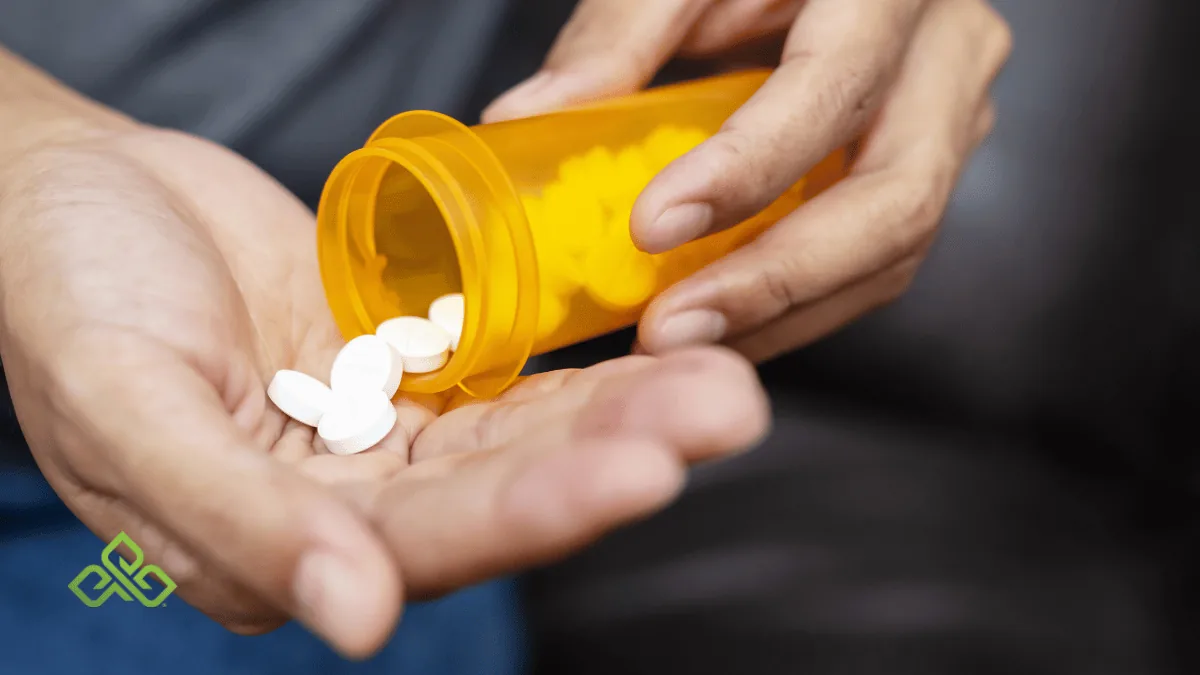
Nobody has ever run a pharmacokinetic study of cannabis with alprazolam. Anyone quoting you a precise number for that specific pairing is inventing it. What does exist is rigorous data on cannabidiol with clobazam, which is also a benzodiazepine, and the answer there is not reassuring: in healthy volunteers, CBD raised the active clobazam metabolite roughly 3.4-fold, and in the FDA registration trials sedation ran 46 percent in patients taking both against 16 percent on cannabidiol alone. The XANAX label separately states that benzodiazepines produce additive CNS depressant effects with other CNS depressants, and it does not mention cannabis anywhere in its text. Here is what the evidence supports, and exactly where it runs out.
Can You Take Weed and Xanax Together?
There is no absolute prohibition, and there is no trial establishing that it is safe.
Two separate concerns sit underneath that pairing, and they are worth keeping apart because the evidence for each is very different in quality.
The first is pharmacodynamic, meaning the two drugs push the same direction on the same system. The XANAX prescribing information states it directly: "Benzodiazepines, including alprazolam, produce additive CNS depressant effects when coadministered with other CNS depressants." Cannabis qualifies as a CNS depressant for this purpose. That mechanism is not controversial.
The second is pharmacokinetic, meaning one drug changes how much of the other reaches the blood. That one is established for a different benzodiazepine, plausible for alprazolam, and never measured for alprazolam.
Most of what circulates online collapses those two into a single confident claim. They are not the same, and the distinction changes what you should actually watch for.
What Happens When You Mix Weed and Xanax?
The predictable effect is more sedation than either produces alone.
Alprazolam's own adverse reaction profile is dominated by CNS depression before cannabis enters the picture at all. In the label's controlled trials, drowsiness was reported in 41 percent of patients treated for generalized anxiety disorder and 77 percent of those treated for panic disorder. Lightheadedness ran 21 percent in the anxiety trials. In the panic disorder trials, impaired coordination reached 40 percent and memory impairment 33 percent.
Cannabis contributes sedation, slowed reaction time, and impaired short term memory on its own. Stacking two agents that each produce those effects produces more of them.
The label does not leave this to inference. It states that "patients receiving XANAX should be cautioned against operating machinery or driving a motor vehicle, as well as avoiding concomitant use of alcohol and other central nervous system (CNS) depressant drugs."
The EPIDIOLEX label makes the general principle explicit for pharmaceutical cannabidiol: "Other CNS depressants, including alcohol, could potentiate the somnolence and sedation effect of EPIDIOLEX."
What that does not tell you is how much. For that, the clobazam data below is the only real evidence available.
Does Cannabis Change How Xanax Is Metabolized?
Plausibly yes, and it has never been measured in people.
Alprazolam is extensively metabolized in humans, primarily by CYP3A4, to two major plasma metabolites, 4-hydroxyalprazolam and alpha-hydroxyalprazolam. Its mean plasma elimination half life is approximately 11.2 hours, with a range of 6.3 to 26.9 hours in healthy adults.
CYP3A4 matters here because the alprazolam label is unusually explicit about how much CYP3A inhibitors move its levels:
| CYP3A inhibitor | Increase in alprazolam total exposure |
|---|---|
| Ketoconazole | 3.98-fold |
| Itraconazole | 2.7-fold |
| Nefazodone | 1.98-fold |
| Fluvoxamine | 1.96-fold |
| Erythromycin | 1.61-fold |
The label contraindicates alprazolam with strong CYP3A inhibitors such as ketoconazole and itraconazole, with the exception of ritonavir.
Now the cannabinoid side. Both major cannabinoids inhibit CYP3A4 in laboratory testing. Reported IC50 values, where lower numbers mean stronger inhibition, are 0.38 micromolar for cannabidiol and 1.30 micromolar for THC against CYP3A4, against 0.30 and 0.57 micromolar respectively for CYP2C19. Those figures come from Zendulka and colleagues in Current Drug Metabolism and are reproduced in the interaction literature.
Here is the honest limit of that reasoning. An in vitro IC50 is a test tube measurement. Translating it into a blood level change in a person requires knowing how much cannabinoid actually reaches the liver, which depends on dose, route, and product, and none of that has been characterized for cannabis with alprazolam. The mechanism is real. The magnitude is unknown. Treat any specific percentage you see quoted for weed and Xanax as fabricated.
What Does the One Real Benzodiazepine Interaction Study Show?
A 3.4-fold rise in the active metabolite of clobazam, which is a benzodiazepine.
This is the strongest evidence in the entire cannabis and benzodiazepine question, and it is usually missed because clobazam is prescribed for seizures rather than anxiety. It is still a benzodiazepine, and the interaction was measured properly.
Morrison and colleagues ran a Phase 1 open label trial in healthy subjects, giving cannabidiol at 750 mg twice daily alongside clobazam. Twelve subjects received the clobazam plus cannabidiol combination.
| Measure | Fold change with cannabidiol | 90 percent confidence interval |
|---|---|---|
| N-desmethylclobazam total exposure | 3.38-fold | 2.62 to 4.36 |
| N-desmethylclobazam peak concentration | 3.39-fold | 2.61 to 4.39 |
| Parent clobazam total exposure | 1.21-fold | 1.05 to 1.39 |
| Parent clobazam peak concentration | 1.20-fold | 1.05 to 1.38 |
Read the pattern rather than the individual numbers. The parent drug barely moved. The active metabolite more than tripled. A clinician monitoring only the parent clobazam level would see a reassuring number while the pharmacologically active compound accumulated.
The mechanism is inhibition of CYP2C19, the enzyme that clears N-desmethylclobazam. A 2025 review in Biomolecules identifies CYP2C19 as the primary pathway, with secondary involvement of CYP3A4 and the UGT enzymes, and reports that somnolence and sedation track this metabolite accumulation and typically improve after the clobazam dose is reduced. That review describes pre-emptively reducing clobazam by 25 to 50 percent if sedation emerges.
One caveat that matters for translating this to recreational or dispensary cannabis: the dose studied was 750 mg of purified cannabidiol twice daily, which is a pharmaceutical dose far above typical consumer CBD products, and the subjects were healthy volunteers rather than patients.
Does the Sedation Actually Show Up in Patients?
Yes. This is the part that moves the question from theory to observed clinical outcome.
The EPIDIOLEX label reports somnolence and sedation rates from the controlled registration trials, split by whether patients were also taking clobazam:
| Trial population | On concomitant clobazam | Not on clobazam |
|---|---|---|
| Lennox-Gastaut and Dravet studies | 46 percent | 16 percent |
| Tuberous sclerosis complex study | 33 percent | 14 percent |
Both comparisons are within cannabidiol-treated patients, so the difference is attributable to the benzodiazepine being present, not to cannabidiol itself. In the larger dataset, adding a benzodiazepine to cannabidiol roughly tripled the sedation rate.
That is a controlled trial outcome, not a model and not a case report. It is the strongest number available on this pairing, and the reason to take it seriously even though nobody has studied alprazolam specifically.
Why Do the Xanax and Cannabis Warnings Not Mention Each Other?
Because the study that would put them there has never been run.
We searched the full XANAX structured product label, from Pharmacia and Upjohn, revised January 2023. The words cannabis, marijuana, THC, and CBD appear zero times. That is not an oversight. Drug interaction sections are assembled from dedicated interaction studies, and no such study exists for cannabis with alprazolam.
The gap runs deeper than one label. The largest systematic review of cannabis drug interactions, Nachnani and colleagues in Frontiers in Pharmacology, searched against a fixed list of 57 narrow therapeutic index medications. Benzodiazepines were not on that list. Across its 31 included reports, benzodiazepines appear only twice in passing: midazolam in a single anesthesia case, and diazepam in a 1976 oral surgery study of five cannabis smokers.
So the review's near silence on benzodiazepines is a property of its search design, not a finding about benzodiazepine safety. That distinction is easy to misreport and frequently is.
The practical consequence is procedural. Electronic prescribing interaction checkers are largely driven by label data, so a cannabis and alprazolam pairing often generates no alert at all. Nothing flags it because nobody has formally asked the question.
Do People Reduce Benzodiazepines After Starting Medical Cannabis?
Some do, in one uncontrolled study, and that finding is weaker than it is usually made to sound.
Purcell and colleagues retrospectively reviewed 146 medical cannabis patients at a Canadian clinic who reported benzodiazepine use when they started cannabis. Mean age was 47.7 years and 61.0 percent were female.
| Follow-up point | Patients off benzodiazepines | Percentage |
|---|---|---|
| After first prescription course | 44 | 30.1 percent |
| After second course | 65 | 44.5 percent |
| After third course, about six months | 66 | 45.2 percent |
That number gets quoted constantly. The authors' own stated limitations deserve equal weight, and they are unusually blunt:
- "The retrospective observational methodology and sample size preclude an inference of a causal relationship between cannabis and benzodiazepine use trends."
- "No objective measure of benzodiazepine discontinuation was used to confirm self-reported data."
- "This study is not designed to, nor should be used to hypothesize physiological mechanisms to explain this observed association between benzodiazepines and cannabis."
- "Without dependable safety data and evidence from randomized trials for this cohort, cannabis cannot be recommended as an alternative to benzodiazepine therapy."
There was no control group. Patients who enroll in a medical cannabis clinic are motivated people often already trying to reduce medications, and benzodiazepine deprescribing was a broad clinical push during that period regardless of cannabis. A single arm with no comparator cannot separate those.
This article does not address whether cannabis treats anxiety. That is a different question with a different and largely unfavorable evidence base, and it is not answered by a discontinuation count.
Is It Dangerous To Stop Xanax on Your Own?
Yes, and this is the most important safety point on the page.
The XANAX boxed warning states that "abrupt discontinuation or rapid dosage reduction of XANAX after continued use may precipitate acute withdrawal reactions, which can be life-threatening," and directs that a gradual taper be used to discontinue or reduce the dose.
The same boxed warning carries two other elements worth knowing. Concomitant use of benzodiazepines and opioids "may result in profound sedation, respiratory depression, coma, and death." And benzodiazepine use "exposes users to risks of abuse, misuse, and addiction, which can lead to overdose or death."
Reading a 45 percent discontinuation statistic and then tapering yourself is the specific mistake to avoid. Benzodiazepine withdrawal can involve seizures. Any reduction belongs to the prescriber.
What About Driving?
Cannabis alone carries a graded conclusion on crash risk. The combination with a benzodiazepine has not been studied.
The 2017 National Academies report reached CONCLUSION 9-3: "There is substantial evidence of a statistical association between cannabis use and increased risk of motor vehicle crashes." The systematic review underlying it found driving under the influence of cannabis associated with 20 to 30 percent higher odds of a crash.
Benzodiazepines independently impair driving. The alprazolam label instructs that patients be cautioned against operating machinery or driving, and that instruction sits in the same sentence as its advice to avoid other CNS depressants.
We looked for a human study measuring driving performance with cannabis and a benzodiazepine together and did not find one. That is a genuine gap in the literature, and it should be reported as a gap rather than filled in with data from a different drug combination. The honest position is that both agents impair driving separately, both labels and the cannabis evidence say so, and nobody has quantified the pair.
What About Counterfeit Xanax?
This is a real risk and it is separate from everything above.
Everything in this article assumes a prescribed, pharmacy-dispensed alprazolam tablet. Pills obtained outside that channel frequently are not alprazolam at all. Counterfeit tablets pressed to look like alprazolam commonly contain illicitly manufactured fentanyl or novel illicit benzodiazepines such as bromazolam, etizolam, or flualprazolam.
NIDA, drawing on CDC WONDER data, reports 10,870 drug overdose deaths involving benzodiazepines in 2023, and that nearly 70 percent of benzodiazepine-involved overdose deaths also involved illicitly manufactured fentanyl.
If the tablet did not come from a pharmacy, the interaction question is not the main hazard. The contents are.
Is Anxiety a Qualifying Condition in Florida, Georgia, or Texas?
No. Anxiety is not a listed qualifying condition in any of the three states Miracle Leaf® serves.
- Florida. Fla. Stat. 381.986 enumerates cancer, epilepsy, glaucoma, HIV, AIDS, post-traumatic stress disorder, ALS, Crohn's disease, Parkinson's disease, multiple sclerosis, a terminal condition, and chronic nonmalignant pain. Anxiety is absent. Subsection (2)(k) covers "medical conditions of the same kind or class as or comparable to those enumerated," which is a physician judgment about comparability, not a listing for anxiety.
- Georgia. The Georgia Department of Public Health registry conditions under O.C.G.A. 31-2A-18 include ALS, Alzheimer's disease, autism spectrum disorder, any cancer except skin cancer, epidermolysis bullosa, hospice status, HIV stage III, inflammatory bowel disease, intractable pain, lupus, mitochondrial disease, multiple sclerosis, Parkinson's disease, peripheral neuropathy, post-traumatic stress disorder, seizure disorders related to a diagnosis of epilepsy or trauma-related head injuries, sickle cell disease, and Tourette's syndrome. Anxiety is absent.
- Texas. Occupations Code 169.003, as amended by HB 46 of 2025, lists epilepsy, seizure disorder, multiple sclerosis, spasticity, ALS, autism, cancer, incurable neurodegenerative disease, post-traumatic stress disorder, a condition causing chronic pain, traumatic brain injury, Crohn's disease or other inflammatory bowel disease, and terminal illness or hospice care. Anxiety does not appear.
Two listed conditions bring this interaction into certification appointments regularly.
Post-traumatic stress disorder qualifies in all three states, and patients carrying that diagnosis are frequently on a benzodiazepine. Epilepsy also qualifies in all three, and that is the direct one: clobazam, the benzodiazepine with the clearest cannabis interaction data on record, is an antiseizure drug. Seizure disorders is separately listed in Georgia and Texas but not Florida.
Anxiety has its own page explaining the evidence and why it is not listed.
What This Means for Florida, Georgia, and Texas Patients
Bring the bottle, or the exact drug and dose. Which benzodiazepine matters. Clobazam has measured interaction data. Alprazolam, lorazepam, diazepam, and clonazepam do not, and they do not all use the same metabolic pathway.
Tell the prescriber who manages the benzodiazepine, not only the certifying physician. Dose adjustment belongs to whoever writes that prescription. A certification visit is a good trigger for that conversation, not a replacement for it.
Expect sedation to be the thing you notice. The clobazam data says the realistic outcome is being more sedated than expected, not a dramatic event. Excess sedation is still how falls, crashes, and workplace injuries happen.
Do not taper yourself. The boxed warning language above is the reason. Abrupt benzodiazepine reduction can be life-threatening.
Flag changes in cannabis use in both directions. If cannabinoids inhibit the enzymes clearing a benzodiazepine, then stopping cannabis can lower levels in someone whose dose was stable on it, just as starting can raise them.
Route and dose are uncharacterized. Inhaled and oral cannabis produce very different cannabinoid exposure, and no interaction study has separated them for any benzodiazepine.
Miracle Leaf® physicians evaluate patients for the Florida, Georgia, and Texas state programs, and the medication list you bring to that visit is part of the evaluation.
What If You Live Outside Florida, Georgia, and Texas?
The pharmacology here is not state specific. The certification pathway is.
If you are in a state where medical cannabis is legal but Miracle Leaf has no clinic, the telehealth program covers evaluations outside the Florida, Georgia, and Texas footprint. The same guidance applies: bring the benzodiazepine name and dose, and tell the prescriber who manages it.
Sources for Cannabis and Benzodiazepine Interactions
- XANAX (alprazolam) tablets prescribing information. FDA structured product label, Pharmacia and Upjohn Company LLC, revised January 2023. Source of the boxed warning, the additive CNS depressant statement, CYP3A4 metabolism, the CYP3A inhibitor exposure table, and the 11.2 hour half life.
- A Phase 1, Open-Label, Pharmacokinetic Trial to Investigate Possible Drug-Drug Interactions Between Clobazam, Stiripentol, or Valproate and Cannabidiol in Healthy Subjects. Morrison G, Crockett J, Blakey G, Sommerville K. Clin Pharmacol Drug Dev. 2019;8(8):1009 to 1031. doi:10.1002/cpdd.665. PMCID PMC6899822. Source of the N-desmethylclobazam and parent clobazam fold changes with confidence intervals.
- EPIDIOLEX (cannabidiol) oral solution prescribing information. FDA structured product label, Jazz Pharmaceuticals. Source of the somnolence and sedation rates with and without concomitant clobazam, and the CNS depressant potentiation statement.
- Pharmacological and Pharmacokinetic Profile of Cannabidiol in Human Epilepsy. Na JH, Lee YM. Biomolecules. 2025;15(12):1668. doi:10.3390/biom15121668. PMCID PMC12731201. Source of the CYP2C19 mechanism and the clobazam down-titration approach.
- Reduction of Benzodiazepine Use in Patients Prescribed Medical Cannabis. Purcell C, Davis A, Moolman N, Taylor SM. Cannabis Cannabinoid Res. 2019;4(3):214 to 218. doi:10.1089/can.2018.0020. PMCID PMC6757237. Source of the discontinuation figures and the verbatim limitations.
- Systematic review of drug-drug interactions of delta-9-tetrahydrocannabinol, cannabidiol, and Cannabis. Nachnani R, Knehans A, Neighbors JD, et al. Front Pharmacol. 2024;15:1282831. doi:10.3389/fphar.2024.1282831. PMCID PMC11167383. Source of the 57 drug narrow therapeutic index search list and the benzodiazepine coverage gap.
- The Impact of Marijuana on Antidepressant Treatment in Adolescents. Vaughn SE, Strawn JR, Poweleit EA, Sarangdhar M, Ramsey LB. J Pers Med. 2021;11(7):615. doi:10.3390/jpm11070615. PMCID PMC8307883. Reproduces the cannabinoid CYP IC50 table originally reported by Zendulka O, et al. Curr Drug Metab. 2016;17:206 to 226.
- The Health Effects of Cannabis and Cannabinoids, Chapter 9: Injury and Death. National Academies of Sciences, Engineering, and Medicine, 2017. Source of CONCLUSION 9-3 and the crash odds figure.
- Drug Overdose Death Rates. National Institute on Drug Abuse, drawing on CDC WONDER. Source of the 2023 benzodiazepine-involved overdose death count and the fentanyl co-involvement proportion.
- Fla. Stat. 381.986, Georgia Medical Cannabis Patient Registry conditions under O.C.G.A. 31-2A-18, and Texas HB 46 of 2025 amending Occupations Code 169.003. State qualifying condition lists.
Related Health and Eligibility Resources
- The cannabis and antidepressants post covers SSRIs and SNRIs, which run through different enzymes and raise a different set of questions than benzodiazepines.
- The is weed a depressant, stimulant, or hallucinogen post covers the classification question underneath the CNS depressant framing used above.
- The does weed raise blood pressure post covers the cardiovascular history that belongs in the same pre-certification conversation.
- The qualifying conditions page covers eligibility across all three state programs.
- The Florida marijuana laws, Georgia marijuana laws, and Texas marijuana laws pages cover each program and its condition list.
Talk to a Physician About Your Medication List
Bring the benzodiazepine name and the dose to the appointment. It changes the evaluation, and in some cases it changes what the physician recommends.
Call (833) LEGAL-MJ or contact us online to book. Evaluation pricing is on the pricing page, and the clinicians who review this content are listed on the editorial team page.
Disclaimer
This post is informational and is not medical advice. It does not evaluate whether cannabis treats anxiety. No published study has measured alprazolam blood levels in people using cannabis; the pharmacokinetic figures cited are for cannabidiol with clobazam, a different benzodiazepine, at a pharmaceutical cannabidiol dose in healthy volunteers. The enzyme inhibition values are in vitro measurements and do not translate directly to blood levels in a person. The discontinuation figures come from a retrospective study with no control group and self-reported outcomes, whose authors state that cannabis cannot be recommended as an alternative to benzodiazepine therapy. Anxiety is not a qualifying condition in Florida, Georgia, or Texas. Do not start, stop, taper, or change a prescribed benzodiazepine based on this article. Abrupt benzodiazepine discontinuation can be life-threatening. Discuss cannabis use with the physician who prescribes your medication.
Common questions
Frequently asked questions
Can you take weed and Xanax at the same time?
Does cannabis change how Xanax is metabolized?
What is the strongest evidence on cannabis and benzodiazepines?
Does that sedation actually show up in patients?
Why does the Xanax label not mention marijuana?
Do people stop taking benzodiazepines after starting medical cannabis?
Is it dangerous to stop Xanax suddenly?
Is anxiety a qualifying condition in Florida, Georgia, or Texas?
Ready to talk with a Miracle Leaf® physician?
Reviewed by Miracle Leaf® Editorial Team. This article is for general education and is updated when the underlying law or clinical guidance materially changes.