
Miracle Leaf® Blog
THCA vs THC: What Heat Changes and What the Law Counts
THCA and THC are the same molecule with one difference: THCA carries an extra carboxyl group, and while it has it, it does not produce a high. Heat from smoking, vaping, or baking knocks that group off and turns THCA into THC. That one reaction explains why THCA flower is sold as hemp, why it still fails drug tests, and why federal law stops treating the two differently on December 11, 2026.
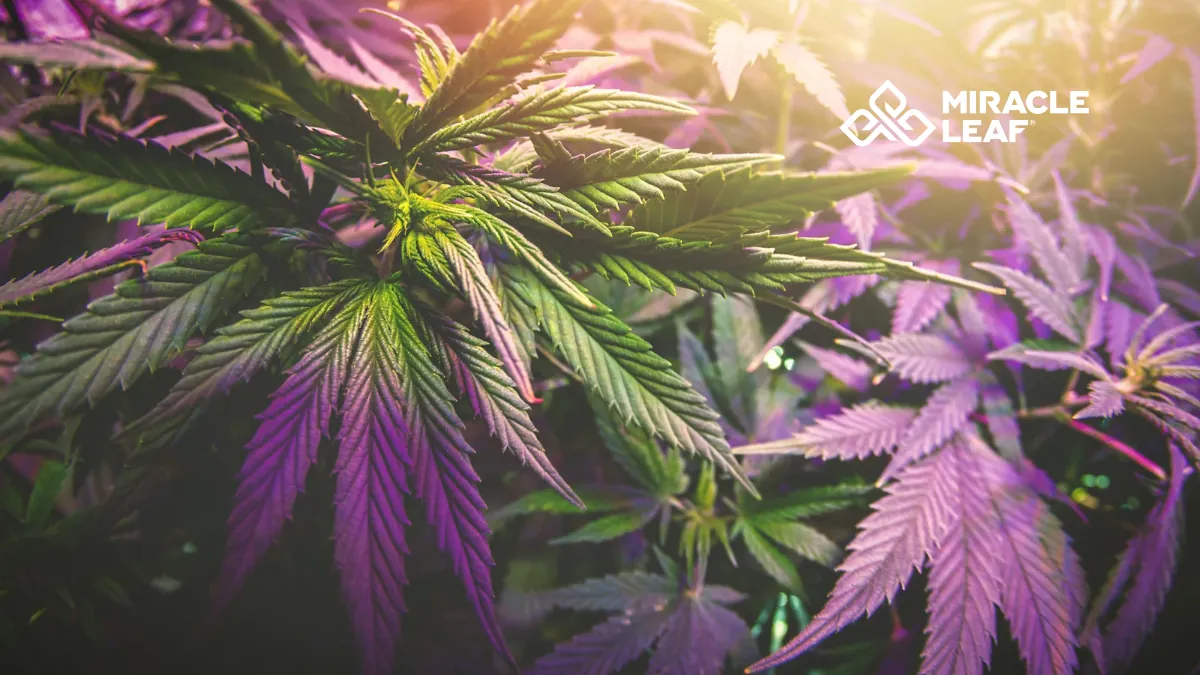
THCA and THC are nearly the same molecule. The difference is one small chemical group, and it is the reason THCA flower can be sold as hemp in some states while acting like marijuana once it is lit.
This post covers what THCA is, what heat does to it, why it matters for drug tests, how labs calculate total THC, and how federal law changes on December 11, 2026. State law for each of our three clinic states is summarized with links to the full articles.
What Is the Difference Between THCA and THC?
THCA is the raw form the plant makes. THC is what THCA becomes after it loses a carboxyl group. That reaction, called decarboxylation, happens slowly as cannabis is stored and quickly when it is heated.
A 2016 review in Cannabis and Cannabinoid Research by Moreno-Sanz describes THCA as the acidic precursor of THC, produced in the plant's glandular trichomes from cannabigerolic acid, the acid form of CBG. The review notes that THCA slowly decarboxylates to THC during storage and that it does not elicit psychoactive effects in humans, which the author suggests is part of why its pharmacology has been neglected.
So in a living plant or freshly dried flower, most of the THC that a label might report is actually THCA waiting to be converted.
Does THCA Get You High?
Not raw. Heated, yes.
Smoking, vaping, and baking all supply enough heat to drive decarboxylation. The Moreno-Sanz review notes that the conversion during smoking or baking is rapid but only partial, so some THCA survives. The rest becomes THC, which is the compound responsible for the high.
That is why heated THCA flower behaves like conventional marijuana flower with a comparable total THC content. The product was not mislabeled as hemp. It was measured before the heat was applied. Eating raw THCA, for example in a tincture that was never heated, is a different case, though THCA can still convert over time in storage.
Will THCA Show Up on a Drug Test?
Plan on it. Once THCA is heated and becomes THC, the body processes it exactly the way it processes THC from any other source. The liver converts THC to an active metabolite and then to THC-COOH, the inactive metabolite that standard urine tests look for, as the Huestis review of human cannabinoid pharmacokinetics describes.
A drug test cannot tell where the THC started. A positive result from THCA flower looks the same as a positive result from marijuana. The how long does THC stay in your system post covers detection windows, and the THC half-life post covers why clearance takes days in frequent users.
What Does Total THC Mean?
Total THC is an estimate of how much THC a product would contain if all of its THCA converted. It is calculated as:
total THC = delta-9 THC + (THCA x 0.877)
The 0.877 is not arbitrary. When THCA loses its carboxyl group as carbon dioxide, the remaining THC molecule weighs about 87.7 percent of the original, because THC has a molar mass of about 314.5 grams per mole and THCA about 358.5. So 10 percent THCA can become, at most, about 8.8 percent THC.
This is why a certificate of analysis can show a delta-9 THC figure under 0.3 percent and a THCA figure of 20 percent or more. Both numbers can be accurate. Only one of them describes what you inhale.
How Does Federal Law Treat THCA?
Until December 11, 2026, the federal definition of hemp at 7 U.S.C. 1639o turns on delta-9 THC concentration, which is the gap THCA flower has been sold through.
Public Law 119-37, enacted November 12, 2025, rewrites that definition, and Public Law 119-103 delayed most of it to December 11, 2026. From that date the federal standard becomes total tetrahydrocannabinols, including THCA, rather than delta-9 alone. Final hemp-derived cannabinoid products are also excluded above 0.4 milligrams combined total per container. The Congressional Research Service confirms the November 12 and December 11 effective dates.
A THCA flower that relies on a low delta-9 reading would not meet a total THC standard. How each state enforces the change is a separate question.
Is THCA Legal in Florida, Georgia, and Texas?
The three states answer differently, and each answer has moved in 2026.
- Florida. Florida defines hemp by total delta-9 THC under Fla. Stat. 581.217. The delta-8, delta-9, and THCA in Florida post explains how that standard counts THCA and what the federal change means for it.
- Georgia. Georgia has its own hemp definition and product rules. The delta-8 and delta-9 in Georgia post has a section on THCA flower.
- Texas. The Department of State Health Services adopted a rule, effective March 31, 2026, defining acceptable hemp THC as 0.3 percent or less of delta-9 THC and THCA combined. It has been enjoined and reinstated through litigation. The Texas hemp ban post tracks where it stands.
None of these articles is a basis for assuming a product is lawful to buy, carry, or sell. A certificate of analysis reflects the seller's testing and is not a legal safe harbor.
What This Means for Florida, Georgia, and Texas Patients
Read the THCA line, not just the delta-9 line. A hemp label can be accurate and still describe a product that is as strong as marijuana once heated.
Assume a positive drug test. None of the three state medical programs adds employment protection for registered patients, so THCA flower carries the same testing risk as any other THC product.
Know what is regulated. Products dispensed through the state medical programs are produced and tested under those programs. Hemp products are not, and their legal status changes federally on December 11, 2026.
Miracle Leaf® physicians evaluate patients for the Florida, Georgia, and Texas programs, and product type and potency are part of that visit. Patients who prefer a non-intoxicating cannabinoid can read the what is CBG post, and the delta-8 vs delta-9 post compares the two THC isomers most often sold as hemp.
What If You Live Outside Florida, Georgia, and Texas?
The chemistry is the same everywhere, but state hemp and medical rules are not. For an evaluation in another state where remote certification is permitted, see the Miracle Leaf® telehealth program.
Sources for THCA and THC
- Can You Pass the Acid Test? Critical Review and Novel Therapeutic Perspectives of Δ9-Tetrahydrocannabinolic Acid A. Moreno-Sanz G. Cannabis Cannabinoid Res. 2016;1:124 to 130. PMID 28861488. PMCID PMC5549534. Source of THCA as the acidic precursor made from cannabigerolic acid, its slow conversion in storage, partial conversion during smoking or baking, and absence of psychoactive effects in humans.
- Human cannabinoid pharmacokinetics. Huestis MA. Chem Biodivers. 2007;4:1770 to 1804. PMCID PMC2689518. Source of THC metabolism to THC-COOH.
- 7 U.S.C. 1639o. Federal hemp definition and the Public Law 119-37 amendment notes.
- Public Law 119-103, Continuing Appropriations and Extensions Act, 2027. Delay of the federal hemp amendment to December 11, 2026.
- Congressional Research Service, In Focus IF13136. Confirmation of the November 12 and December 11, 2026 effective dates.
Related Cannabinoid and Hemp Resources
- The delta-8 vs delta-9 post compares the two THC isomers sold as hemp.
- The what is CBG post covers the cannabinoid THCA is made from.
- The how long do edibles last post covers what happens when THCA is baked into food.
- The delta-8, delta-9, and THCA in Florida post covers Florida hemp law in detail.
- The Texas hemp ban post covers the Texas THCA rule and litigation.
Talk to a Physician About Your Options
If you are choosing between hemp products and a state medical program, a physician can walk through the difference. Call (833) LEGAL-MJ or contact us online to book. Pricing is on the pricing page.
Disclaimer
This post is informational and is not medical or legal advice. Hemp law is changing at the federal level on December 11, 2026 and is contested in several states, and nothing here states that any product is lawful to buy, possess, carry, or sell. Potency figures on hemp labels come from the seller's own testing. A state medical cannabis card does not protect against employment action based on a drug test in Florida, Georgia, or Texas. Do not drive or operate machinery after using cannabis.
Common questions
Frequently asked questions
What is the difference between THCA and THC?
Does THCA get you high?
Will THCA show up on a drug test?
What does total THC mean?
Is THCA legal federally?
Is THCA legal in Florida, Georgia, and Texas?
Ready to talk with a Miracle Leaf® physician?
Reviewed by Miracle Leaf® Editorial Team. This article is for general education and is updated when the underlying law or clinical guidance materially changes.