
Miracle Leaf® Blog
How Long Do Edibles Last? Onset, Peak, and Duration
Edibles last much longer than smoked cannabis. In a controlled study of THC brownies, effects peaked 1.5 to 3 hours after eating and lasted 6 to 8 hours, and blood THC stayed detectable for most of a day. The reason is the route: THC eaten in food is absorbed slowly and passes through the liver, which makes an active metabolite. Here is what the studies measured, why the timing varies, and how to avoid taking a second dose too soon.
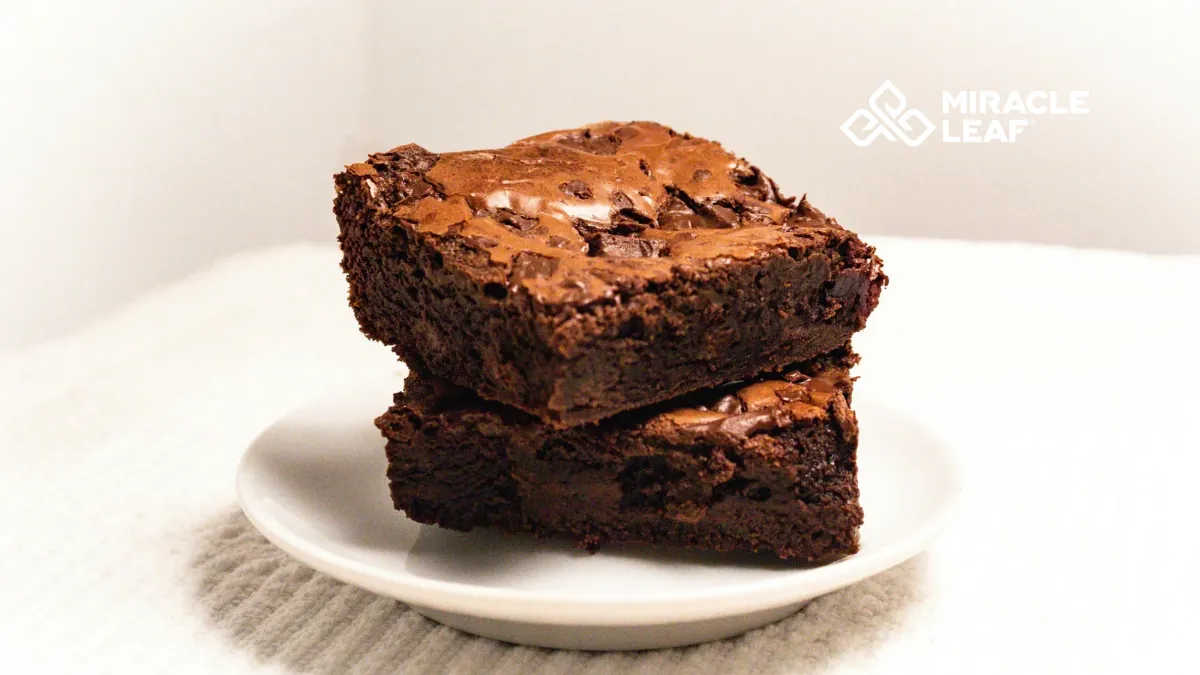
Edibles last much longer than smoked or vaped cannabis, and they start much later. Both facts come from the same cause: THC that is eaten takes a slow route through the body.
This post covers how long edibles take to start, when they peak, how long they last, why the timing varies, and how long THC stays detectable afterward.
How Long Do Edibles Last?
Most of a day, in controlled studies.
Vandrey and colleagues, in a 2017 study in the Journal of Analytical Toxicology, gave healthy adults brownies containing 10, 25, or 50 mg of THC, six people per dose, and tracked them in a residential research unit. Subjective effects were generally dose dependent, peaked 1.5 to 3 hours after eating, and lasted 6 to 8 hours.
Higher doses produced stronger effects, not just longer ones. Some people feel groggy the next morning after a large dose.
How Long Do Edibles Take to Kick In?
Slowly, over the first hour or two, and sometimes longer.
A CDC report in Morbidity and Mortality Weekly Report notes that eaten THC is absorbed slowly, with mean peak blood levels 1 to 2 hours after ingestion. The NIDA researcher Marilyn Huestis, in a review of human cannabinoid pharmacokinetics, cites a study in which peak THC levels came 1 to 5 hours after eating 20 mg of THC in a chocolate cookie.
That range is wide because absorption through the gut is erratic. It depends on what else is in the stomach, the product itself, and the person.
Why Do Edibles Last Longer Than Smoking?
Because the THC takes a different path.
- Inhaled. THC passes from the lungs into the blood, with peak levels within 3 to 10 minutes, according to a 2018 review by Lucas, Galettis, and Schneider in the British Journal of Clinical Pharmacology. Effects fade within a few hours.
- Eaten. THC is absorbed slowly through the gut and carried to the liver before it reaches the rest of the body. The liver converts much of it to 11-hydroxy-THC, which is itself active. Huestis puts oral bioavailability at 4 to 20 percent, reduced by breakdown in the stomach and that first pass through the liver.
So less of an eaten dose reaches the blood, but it arrives slowly, includes an active metabolite, and keeps arriving for hours. Vandrey and colleagues found blood THC levels after brownies were low compared with what follows inhalation, even though the effects lasted far longer.
Why Does the Timing Vary From Person to Person?
Several factors shift it.
Dose. In the Vandrey study, effects rose with dose. A 50 mg brownie is not five times as long as a 10 mg brownie, but it is much stronger.
Sex. A 2020 follow-up by Spindle and colleagues gave brownies to 17 adults and found blood THC and 11-hydroxy-THC peaked 1.5 to 2 hours after eating. Women had higher peak blood concentrations of THC and all of its metabolites than men.
Tolerance and frequency. People who use cannabis often feel a given dose less. The THC half-life post covers how frequent use also slows clearance.
Age and other medications. Lucas and colleagues note that reduced liver and kidney clearance and relatively more body fat can increase exposure in older adults. The same liver enzymes that process THC process many prescription drugs, which the cannabis drug interactions guide covers.
How Long Should You Wait Before Taking More?
At least two hours, and longer with a new product.
The CDC report notes that because of the delayed effects of edibles, multiple servings might be consumed in close succession. That is the pattern behind many bad reactions: the first serving has not peaked when the second goes down. A Colorado emergency department study found edibles accounted for 10.7 percent of cannabis-related visits while making up a tiny share of sales. The greening out post covers that study and what to do after taking too much.
Read the label for milligrams per serving, not per package. A single bar or bag often contains several servings.
How Long Do Edibles Stay in Your System?
Longer than the effects. In the Vandrey study, THC was detectable in whole blood for up to 22 hours after a brownie, and THC-COOH, the inactive metabolite, peaked later than THC.
Urine tests look for THC-COOH, which remains detectable for days and longer in frequent users. The how long does THC stay in your system post covers detection windows, and the saliva drug tests and cannabis post covers oral fluid, where Vandrey found an early THC peak that reflected residue in the mouth rather than absorption.
How Long Do Edibles Last Before They Go Bad?
This post is about effects, not storage. For shelf life, follow the expiration or best-by date on the package, keep products sealed and cool, and store them locked and labeled away from children and pets. An edible that has changed color, texture, or smell should be thrown out.
What This Means for Florida, Georgia, and Texas Patients
Use your program's labeled dose. Products dispensed through the state medical programs carry tested potency. Texas, for example, defines low-THC cannabis at no more than 10 mg of THC per dosage unit.
Plan the timing. Because effects can last 6 to 8 hours, take edibles when you will not need to drive or work for the rest of the day.
Ask about route. Inhaled and oral products suit different needs. Edibles last longer but start slowly, which suits some symptoms and not others.
Miracle Leaf® physicians evaluate patients for the Florida, Georgia, and Texas programs, and route and dose are part of that visit. Hemp edibles are a separate market with their own rules. The delta-8 vs delta-9 and THCA vs THC posts cover what those products contain.
What If You Live Outside Florida, Georgia, and Texas?
Edible timing works the same way everywhere. For an evaluation in another state where remote certification is permitted, see the Miracle Leaf® telehealth program.
Sources for Edible Onset and Duration
- Pharmacokinetic Profile of Oral Cannabis in Humans: Blood and Oral Fluid Disposition and Relation to Pharmacodynamic Outcomes. Vandrey R, Herrmann ES, Mitchell JM, et al. J Anal Toxicol. 2017;41:83 to 99. Source of the 10, 25, and 50 mg doses, the 1.5 to 3 hour peak, the 6 to 8 hour duration, the 22 hour blood detection window, and the oral fluid finding.
- Pharmacokinetics of Cannabis Brownies: A Controlled Examination of Δ9-Tetrahydrocannabinol and Metabolites in Blood and Oral Fluid of Healthy Adult Males and Females. Spindle TR, et al. J Anal Toxicol. 2020;44:661 to 671. Source of the 1.5 to 2 hour blood peak and the sex difference.
- Notes from the Field: Death Following Ingestion of an Edible Marijuana Product, Colorado, March 2014. CDC. MMWR. 2015;64(28). Source of the 1 to 2 hour peak and the repeated-serving pattern.
- Human cannabinoid pharmacokinetics. Huestis MA. Chem Biodivers. 2007;4:1770 to 1804. PMCID PMC2689518. Source of the 1 to 5 hour cookie study and oral bioavailability.
- The pharmacokinetics and the pharmacodynamics of cannabinoids. Lucas CJ, Galettis P, Schneider J. Br J Clin Pharmacol. 2018;84:2477 to 2482. PMCID PMC6177698. Source of inhaled peak timing, 11-hydroxy-THC, and age effects.
Related Dosing and Testing Resources
- The greening out post covers what to do after taking too much.
- The THC half-life post covers how THC is cleared.
- The how long does THC stay in your system post covers urine detection.
- The what is CBG post covers a non-intoxicating cannabinoid found in some edibles.
- The cannabis drug interactions guide covers medications that change THC clearance.
Talk to a Physician About Dosing
If you want to use edibles for a qualifying condition, a physician can help you choose a starting dose and timing. Call (833) LEGAL-MJ or contact us online to book. Pricing is on the pricing page.
Disclaimer
This post is informational and is not medical advice. The studies cited were small, used healthy adults and specific doses, and describe groups rather than any individual. Timing cannot be used to predict when a specific person will feel effects or test negative, and nothing here is guidance on passing a drug test. A state medical cannabis card does not protect against employment action based on a drug test in Florida, Georgia, or Texas. Do not drive or operate machinery after using cannabis, and keep edibles away from children and pets.
Common questions
Frequently asked questions
How long do edibles last?
How long do edibles take to kick in?
Why do edibles last longer than smoking?
How long should you wait before taking more of an edible?
How long do edibles stay in your system?
Do edibles affect women and men differently?
Ready to talk with a Miracle Leaf® physician?
Reviewed by Miracle Leaf® Editorial Team. This article is for general education and is updated when the underlying law or clinical guidance materially changes.