
Miracle Leaf® Blog
Quitting Cannabis: A Clinical Guide
Quitting cannabis is common and usually done without a clinic, but the evidence on what helps is clear in a few places. Behavioral treatments, especially cognitive behavioral therapy combined with motivational enhancement, have the strongest trial support. No medication is approved for cannabis use disorder, and a 2025 Cochrane review still calls every candidate experimental. Here is what the research shows, what the first weeks usually look like, and what it means if you are a medical cannabis patient in Florida, Georgia, or Texas.
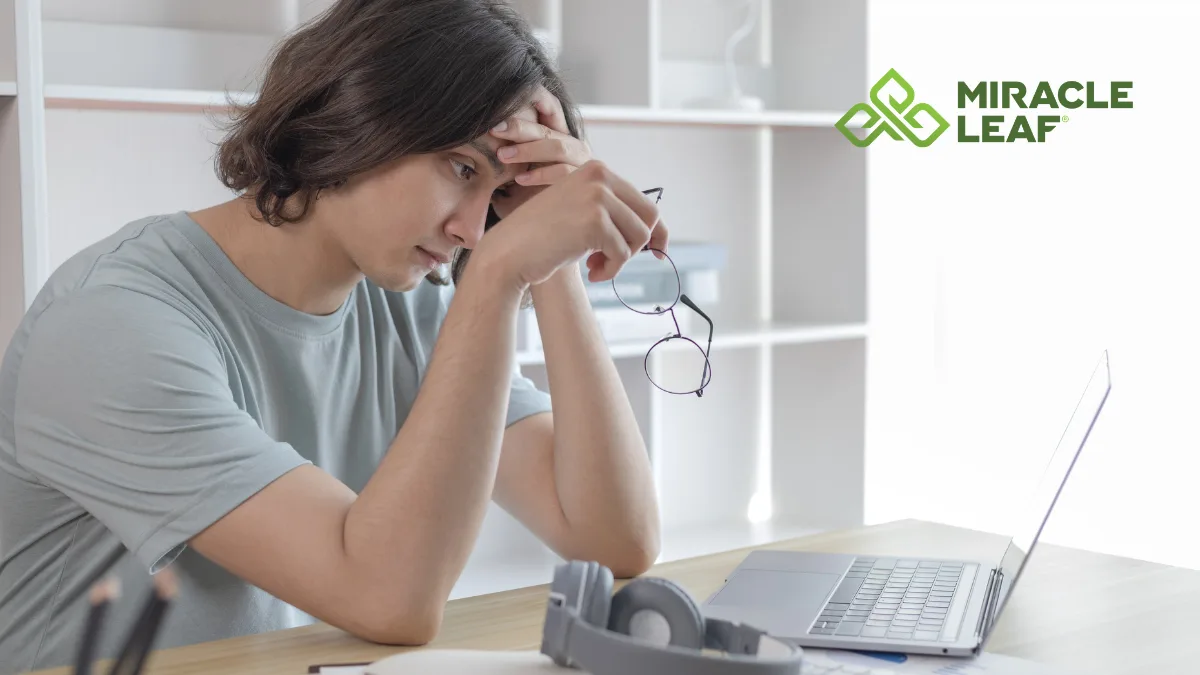
Most people who stop using cannabis do it on their own, and many succeed. Some find it harder than they expected, and for them the research is more useful than most advice online, because it has actually tested what helps.
What follows covers the treatments with trial evidence, why no medication is approved, what the first weeks usually look like, and what changes if you are a medical cannabis patient. Whether cannabis is addictive in the first place is covered in the is cannabis addictive post. The detailed symptom timeline of stopping is covered in the cannabis withdrawal symptoms post.
What Is the Best Way to Quit Weed?
Behavioral treatment has the strongest evidence. Cognitive behavioral therapy and motivational enhancement therapy, particularly combined, reduced how often people used and how severe their dependence was, and longer programs outperformed brief ones.
That finding comes from the Cochrane review of psychosocial interventions for cannabis use disorder, which pooled 23 randomized controlled trials with 4,045 participants. Treatments ran about seven sessions over about 12 weeks. Compared with minimal or inactive controls at roughly four months:
- About 7 in 10 participants completed treatment as intended.
- Treated participants used cannabis on fewer days and reported fewer symptoms of dependence.
- Treated participants were more likely to report abstinence, though the review rated that evidence low quality.
- Programs with more than four sessions over more than a month produced consistently better short-term results than brief interventions.
Two caveats matter. No single treatment was consistently effective at nine months or later. And abstinence rates were low overall, with about one quarter of participants abstinent at final follow-up. The review notes that rate is comparable to treatment for other substances, which is a fair way to read it: quitting cannabis is not unusually hard, and it is not easy either.
What Do CBT, MET, and Contingency Management Actually Involve?
Cognitive behavioral therapy (CBT) works on the situations, thoughts, and routines tied to use. Typical content includes identifying triggers, planning for cravings, and building alternatives for the times of day use used to fill.
Motivational enhancement therapy (MET) is shorter and focuses on the person's own reasons for change. It is designed to resolve ambivalence, which is common: many people want to cut back and also want to keep using.
Contingency management gives a tangible reward, usually vouchers, for drug-negative urine tests. In the Cochrane review, five of six studies supported adding voucher-based incentives to improve results on frequency of use. It is used as an addition to CBT or MET rather than on its own.
A licensed counselor, psychologist, or addiction treatment program delivers these. Some primary care clinicians can refer directly.
Is There a Medication to Help You Quit Cannabis?
No medication is approved by the FDA for cannabis use disorder. Several have been tested, and none has shown reliable benefit.
The 2025 Cochrane review of pharmacotherapies for cannabis use disorder included 37 randomized trials with 3,201 participants. Compared with placebo, abstinence at end of treatment was no more likely with THC preparations or N-acetylcysteine (both moderate-certainty evidence), and may be no more likely with cannabidiol or with anticonvulsants and mood stabilizers. Participants on anticonvulsants and mood stabilizers were more likely to drop out because of side effects. The authors concluded that these medications "should still be considered experimental."
That conclusion is the reason no responsible guide, this one included, recommends a specific drug for quitting. A clinician may still treat a specific problem such as insomnia during withdrawal. That is a decision for someone who knows your history and your other prescriptions.
Do not use another substance to get through withdrawal. Alcohol and sedatives carry their own risks, and the cannabis and alcohol and cannabis and Xanax posts cover why combining depressants is a problem.
What Happens in the First Weeks After You Stop?
For people who used daily or near daily, withdrawal symptoms typically begin within one to two days, peak in the first week, and ease within about two weeks. Sleep problems often outlast the rest.
The common symptoms are irritability, anxiety, trouble sleeping, vivid or unpleasant dreams, reduced appetite, restlessness, and low mood. The 2022 Addiction review of cannabis withdrawal describes the syndrome as well characterized and states that it does not carry a high risk of severe adverse outcomes. Occasional users usually notice little or nothing.
Practical points that follow from the timeline:
- Expect the first week to be the hardest. Planning for it, rather than being surprised by it, is part of what CBT teaches.
- Expect sleep to lag. Poor sleep in week three is a known pattern, not a sign that quitting has failed.
- Watch for a second wave of mood symptoms. Anger and low mood can peak after the first two weeks rather than in the first few days.
The full symptom list, the DSM-5 criteria, and the study-by-study timing are in the cannabis withdrawal symptoms post.
Does Quitting Cannabis Improve Anxiety, Mood, or Sleep?
Reductions in use are associated with improvements in some studies, but the evidence shows association, not proof of cause.
The clearest example is a secondary analysis by Hser and colleagues of 302 adults aged 18 to 50 in a 12-week cannabis use disorder medication trial. Participants whose use declined over the trial showed improvement in anxiety, depression, and sleep quality compared with those whose use increased, after adjusting for demographics, treatment group, and tobacco and alcohol use. Quality of life did not differ.
People were not randomized to cut back, so the analysis cannot rule out that improving mood made it easier to reduce use rather than the reverse. The authors' practical conclusion is a modest one: clinicians treating anxiety, depression, or sleep problems in people who use cannabis should treat cannabis reduction as part of the plan.
Is Cutting Back an Alternative to Quitting?
For some people it is a reasonable goal, and the trial evidence measured both. The Cochrane review reported fewer days of use and fewer dependence symptoms as outcomes alongside abstinence.
Cutting back is easier to sustain for people whose use is moderate and whose problems are limited. It tends to be harder for people who meet several criteria for cannabis use disorder, particularly loss of control, which is one of the eleven DSM-5 criteria. Which goal fits is a reasonable question to work through with a clinician.
When Should You Get Professional Help?
Get help if you have tried to cut down and could not, if use is causing problems at work, school, or home, or if stopping brings severe mood symptoms.
Seek help urgently if you have thoughts of self-harm, if withdrawal symptoms are severe enough that you cannot function, or if you are also stopping alcohol, benzodiazepines, or opioids. Withdrawal from those substances is a separate and more serious medical problem.
Where to start:
- Your primary care clinician, who can screen, refer, and review your other medications.
- The SAMHSA National Helpline at 1-800-662-4357, free, confidential, and open 24 hours a day, for treatment referrals.
- FindTreatment.gov, SAMHSA's locator for licensed treatment programs.
- The 988 Suicide and Crisis Lifeline, by call or text, if you are in crisis.
What If You Are a Medical Cannabis Patient?
You can stop at any time. A certification is permission under state law, not an obligation to use cannabis.
Tell your certifying physician. You were certified for a reason, and that condition still needs a plan. The physician can talk through what to expect and what to watch for.
Tell whoever prescribes your other medications. Cannabis affects how some drugs are metabolized, so a change in use, in either direction, can change how those drugs behave. The cannabis drug interactions guide explains the enzyme pathways involved.
Do not read withdrawal as a relapse of your condition. Irritability, anxiety, and poor sleep in the first two weeks are expected withdrawal features. Confusing them with a worsening condition can lead to unnecessary medication changes.
What This Means for Florida, Georgia, and Texas Patients
None of the three state programs requires a patient to keep using.
- Florida. A patient can simply stop purchasing. The physician certification and the OMMU registry card expire on their own schedule if not renewed. The Florida program hub covers the certification process.
- Georgia. A registry card does not oblige use. The Georgia program hub covers how the Department of Public Health registry works.
- Texas. A Compassionate Use Program prescription is filled only when the patient chooses to fill it. The Texas program hub covers TCUP.
Cannabis use disorder is not a qualifying condition in any of the three programs, and a history of it is clinical information a physician considers rather than a bar to certification. Miracle Leaf® physicians are available to talk through stopping, cutting back, or continuing, and that conversation belongs in a follow-up visit as much as in a first evaluation.
What If You Live Outside Florida, Georgia, and Texas?
The treatment evidence is not state specific. The Cochrane reviews pooled trials from several countries. For a medical cannabis evaluation or follow-up in another state where remote certification is permitted, see the Miracle Leaf® telehealth program.
Sources for Quitting Cannabis
- Psychosocial interventions for cannabis use disorder. Gates PJ, Sabioni P, Copeland J, Le Foll B, Gowing L. Cochrane Database Syst Rev. 2016;(5):CD005336. doi:10.1002/14651858.CD005336.pub4. PMCID PMC4914383. Source of the 23 trials and 4,045 participants, treatment completion, intensity, CBT and MET findings, voucher incentives, and the one-quarter abstinence rate.
- Pharmacotherapies for cannabis use disorder. Spiga F, et al. Cochrane Database Syst Rev. 2025;9:CD008940. doi:10.1002/14651858.CD008940.pub4. PMCID PMC12481667. Source of the 37 trials and 3,201 participants, the abstinence results by drug class, the dropout finding, and the "experimental" conclusion.
- Reductions in cannabis use are associated with improvements in anxiety, depression, and sleep quality, but not quality of life. Hser YI, Mooney LJ, Huang D, et al. J Subst Abuse Treat. 2017;81:53 to 58. doi:10.1016/j.jsat.2017.07.012. PMCID PMC5607644.
- Clinical management of cannabis withdrawal. Connor JP, Stjepanovic D, Budney AJ, Le Foll B, Hall WD. Addiction. 2022;117(7):2075 to 2095. doi:10.1111/add.15743. PMCID PMC9110555. Source of the withdrawal course and the statement that withdrawal does not carry a high risk of severe adverse outcomes.
- SAMHSA National Helpline. Substance Abuse and Mental Health Services Administration. Source of the helpline number and hours.
Related Health and Eligibility Resources
- The is cannabis addictive post covers cannabis use disorder, how common it is, and who is most at risk.
- The cannabis withdrawal symptoms post covers the symptoms of stopping and how long each lasts.
- The cannabis and antidepressants post covers why a change in cannabis use belongs in a conversation with whoever prescribes psychiatric medication.
- The how long does THC stay in your system post covers detection windows after stopping.
- The qualifying conditions page covers eligibility in all three state programs.
Talk to a Physician About Stopping or Cutting Back
Whether you are certified now or considering it, how you want to use cannabis, including not at all, is a fair subject for a visit. Call (833) LEGAL-MJ or contact us online to book. Pricing is on the pricing page.
Disclaimer
This post is informational and is not medical advice. It summarizes trial evidence on treatments for cannabis use disorder and cannot substitute for an assessment by a clinician who knows your history. No medication is approved by the FDA for cannabis use disorder, and nothing here recommends one. The association between reduced use and improved mood and sleep comes from a non-randomized analysis and does not show cause. If you are stopping alcohol, benzodiazepines, opioids, or other substances at the same time, seek medical supervision. Do not start, stop, or change a prescribed medication based on this article. If you are in crisis or thinking about self-harm, call or text the 988 Suicide and Crisis Lifeline.
Common questions
Frequently asked questions
What is the best way to quit weed?
Is there a medication to help you quit cannabis?
What happens when you stop smoking weed?
How long does it take to quit weed?
Does quitting cannabis improve anxiety or sleep?
Should a medical cannabis patient stop without talking to their doctor?
Where can I get help quitting cannabis?
Ready to talk with a Miracle Leaf® physician?
Reviewed by Miracle Leaf® Editorial Team. This article is for general education and is updated when the underlying law or clinical guidance materially changes.