
Miracle Leaf® Blog
Can You Own a Gun With a Medical Marijuana Card? (2026)
Federal law prohibits firearm possession by medical marijuana patients under 18 U.S.C. section 922(g)(3), even after the April 2026 DOJ rescheduling and even in permitless-carry states like Florida and Texas. The post-Bruen circuit splits are reshaping the law, the Supreme Court is poised to rule in Hemani, but the perjury trap on ATF Form 4473 is real and active today. Here is what patients need to discuss with a Second Amendment attorney before purchasing, possessing, or carrying.
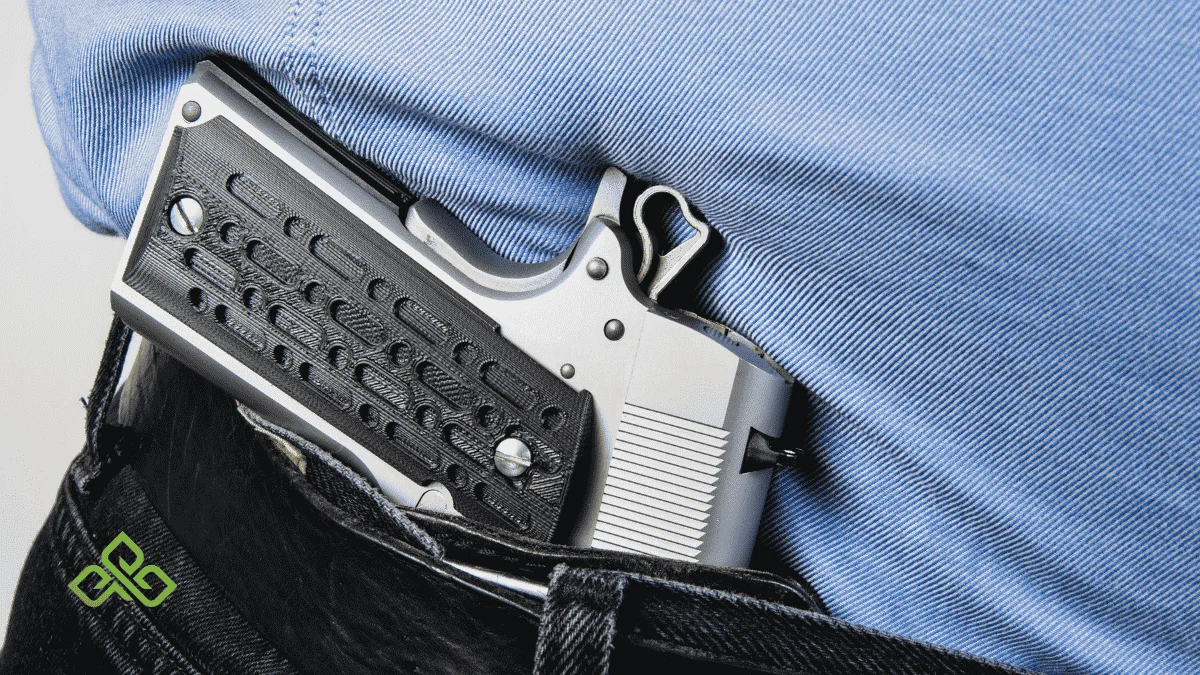
What Medical Marijuana Patients Need to Know About Firearms
Federal law prohibits firearm possession by medical marijuana patients under 18 U.S.C. section 922(g)(3), the controlled-substance provision of the Gun Control Act of 1968. The Department of Justice's April 22, 2026 administrative order moving state-licensed medical marijuana from Schedule I to Schedule III of the Controlled Substances Act did not repeal that prohibition. State permitless concealed-carry laws like Florida HB 543 and Texas HB 1927 did not repeal it. Until the Supreme Court rules in United States v. Hemani (oral argument heard March 2, 2026, decision expected summer 2026), the federal statute remains enforceable at every Federal Firearms Licensee gun counter in the United States.
Miracle Leaf® physicians evaluate qualifying conditions and certify patients into state medical marijuana registries. Miracle Leaf® cannot provide legal advice on the intersection of medical certification and federal firearms law. This post explains the federal framework, the post-Bruen litigation reshaping it, the Florida and Texas state-licensing posture, and the practical risk tiers for purchasing, possessing, and carrying. Every patient considering a firearm purchase or possession decision while holding an active medical card should consult a Second Amendment attorney licensed in their state.
The Federal Prohibition: 18 U.S.C. Section 922(g)(3)
The Gun Control Act of 1968 makes it a federal felony for any person who is an unlawful user of, or addicted to, any controlled substance to ship, transport, receive, or possess any firearm or ammunition in interstate or foreign commerce. The statute does not define unlawful user and contains no temporal nexus specifying how recently a substance must have been consumed to trigger disarmament. Historically the ATF interpreted the phrase broadly, treating a single failed drug test, a misdemeanor possession conviction, or possession of a state medical marijuana card as sufficient to establish prohibited-person status.
Federal prosecutors have brought section 922(g)(3) charges against non-violent cannabis users. The Jared Harrison prosecution in Oklahoma began with a routine traffic stop and produced a federal indictment carrying up to 15 years for possessing a firearm alongside marijuana products. The Paola Connelly prosecution proceeded after a shots-fired call at her home revealed cannabis (her husband had fired the shots). The Hunter Biden prosecution applied the same statute. The statutory penalty under the Bipartisan Safer Communities Act framework runs up to 15 years and a $250,000 fine for false statements on the firearms transaction record.
ATF Form 4473 Question 21.g and the False-Statement Felony
Every commercial firearm purchase from a federally licensed dealer requires the buyer to complete ATF Form 4473, the Firearms Transaction Record, under penalty of perjury. The current controlled-substance question (now Q21.g, historically Q11.e then Q21.e then Q21.f as the form has been revised) asks whether the buyer is an unlawful user of, or addicted to, marijuana or any other controlled substance. A bolded warning added in 2017 states that marijuana use remains unlawful under federal law regardless of state legalization.
Answering Yes produces an automatic transfer denial with no criminal liability. Answering No while holding an active medical card or actively consuming exposes the buyer to two federal felony statutes: 18 U.S.C. section 922(a)(6) (false statement material to lawfulness of sale) and 18 U.S.C. section 924(a)(1)(A) (false statement in records required to be kept by an FFL). The Supreme Court held in Abramski v. United States, 573 U.S. 169 (2014), that Form 4473 attestations are material to the lawfulness of the sale.
The signed form is the evidence. Conviction rates on prosecuted Form 4473 cases approach certainty because the document is documentary proof of the offense.
The 2026 ATF Interim Final Rule and Form 4473 Revision
Two administrative shifts in 2026 have softened, but not eliminated, the federal prohibition.
The January 2026 ATF Interim Final Rule narrowed the definition of unlawful user. Under the new rule a person qualifies as an unlawful user only if they regularly use a controlled substance over an extended period of time continuing into the present, with sufficient regularity and recency to indicate active engagement. Isolated or sporadic use no longer triggers the prohibition. The rule still likely captures habitual medical patients who consume daily or weekly to manage chronic conditions.
In response to the April 22 2026 rescheduling, the ATF proposed a revised Form 4473 with comment period through July 7, 2026. The proposed text states: "I am not an unlawful user of, or addicted to, marijuana or any depressant, stimulant, narcotic drug, or any other controlled substance. (Warning: You can be an unlawful user under federal law, even if your possession is legal under state law. Federal law does not permit the use or possession of marijuana for recreational purposes.)" The previous explicit reference to medicinal use was removed. Legal analysts read the draft as narrowing the federal prohibition to recreational use, but the form is not yet finalized and the underlying statute is not yet amended.
Post-Bruen: How the Courts Are Unwinding the Categorical Ban
The Supreme Court's 2022 decision in New York State Rifle & Pistol Association v. Bruen, 597 U.S. 1, replaced the previous means-end scrutiny test with a strict historical-tradition standard. Under Bruen, if the Second Amendment's plain text covers an individual's conduct, the government must prove the regulation is consistent with the Nation's historical tradition of firearm regulation. Founding-era analogues are required.
The Fifth Circuit applied Bruen to section 922(g)(3) in United States v. Daniels, 77 F.4th 337 (5th Cir. 2023), and reversed the conviction of a regular marijuana user found with firearms during a traffic stop. The court held that while historical traditions may support disarming an actively intoxicated person, no founding-era analogue supports disarming a sober citizen based on past or habitual drug use. The decision binds federal courts in Texas, Louisiana, and Mississippi.
In Florida, Florida Commissioner of Agriculture v. Attorney General (11th Cir. Aug. 20, 2025) (formerly Fried v. Garland) revived the civil rights claims of state-compliant medical marijuana patients seeking to invalidate section 922(g)(3) as applied. The Eleventh Circuit panel held the federal government failed at the pleading stage to satisfy the Bruen historical burden. The case returns to the district court for evidentiary review.
The Supreme Court heard oral argument in United States v. Hemani on March 2, 2026. The case will resolve the constitutionality of section 922(g)(3) on a national basis. Justices Barrett and Gorsuch reportedly expressed skepticism about the government's reliance on founding-era habitual-drunkard analogues and the paradox of defending the categorical ban while the executive branch was simultaneously rescheduling marijuana. A decision is expected by summer 2026.
Florida CWFL, HB 543 Permitless Carry, and the MMUR Privacy Shield
The Florida Department of Agriculture and Consumer Services administers the Concealed Weapon or Firearm License and has publicly stated it does not query the Medical Marijuana Use Registry during licensing. The MMUR is confidential and exempt from public record under Florida Statute section 381.987. Law enforcement access is limited to active investigations where the subject specifically claims a medical marijuana exception.
Florida HB 543, effective July 1, 2023, eliminated the CWFL requirement for eligible adults age 21 and older. Patients no longer need to submit a state application or answer state questions about drug use. The eligibility prohibitions in Florida Statute section 790.06 still apply (felony conviction, certain domestic violence or mental health adjudications).
HB 543 did not change federal law. A patient may carry a previously owned firearm under state law without any state permit, but purchasing a new firearm from an FFL still triggers the federal NICS background check and the Form 4473 attestation.
Texas TCUP, LTC, and HB 1927 Permitless Carry
The Texas Compassionate Use Program is administered by the Texas Department of Public Safety, which also administers the License to Carry. Texas does not issue physical medical marijuana cards. Patient prescriptions are entered into the Compassionate Use Registry of Texas (CURT) and verified at dispensation by ID and partial SSN lookup.
Texas HB 46, effective September 1, 2025, expanded TCUP from the previous 1 percent THC by weight cap to 10 mg of THC per dose with a 1 gram per package limit, authorized non-smoked pulmonary inhalation (vaporization), and added chronic pain, gastrointestinal disorders including Crohn's disease, and traumatic brain injury to the qualifying-conditions list.
DPS has stated that participation in TCUP does not automatically prevent LTC qualification or gun ownership under state law. DPS does not impose special background checks targeting CUP participants. The agency retains authority to refer an LTC application to the Medical Advisory Board if the underlying medical condition (uncontrolled epilepsy, advanced terminal cancer, neurodegenerative disease) might impair firearm competency.
Texas HB 1927, effective September 1, 2021, authorized permitless concealed and open carry for eligible Texans. Federal law is unchanged. Every Texas FFL purchase still executes the federal NICS check and Form 4473.
Practical Risk for Patients: Purchase vs. Possession vs. Carry
Federal exposure varies dramatically by the specific action.
Purchase from an FFL is maximum federal exposure. The signed Form 4473 is documentary evidence of the offense, the statutory penalty reaches 15 years, and the conviction rate on prosecuted cases approaches certainty. The proposed 2026 form revision may reduce this exposure for medical patients once finalized, but the current form is the operative form.
Possession of pre-owned firearms carries lower and decreasing risk for state-compliant non-violent patients. The Daniels and Eleventh Circuit rulings, the January 2026 ATF Interim Final Rule, and Acting Attorney General Blanche's stated reconsideration of these prosecutions all point toward reduced enforcement priority. The risk is not zero.
Carrying under state permitless-carry laws is state-low federal-conditional. State law enforcement generally does not enforce federal firearms law, but the discovery of a firearm and cannabis together during a traffic stop or self-defense incident can escalate to a federal referral, particularly if aggravating factors are present.
Why This Is a Legal Question, Not a Medical One
Miracle Leaf® physicians certify medical need under Florida Statute section 381.986 or the Texas Compassionate Use Program. Legal strategy under federal firearms law belongs entirely with a Second Amendment attorney licensed in your state. The interaction of section 922(g)(3), the evolving Form 4473, the January 2026 Interim Final Rule, Bruen, Daniels, the Eleventh Circuit revival, and the pending Hemani decision creates a fact-specific analysis that no clinic can perform.
Patients with active MMUR or TCUP registry status who already own firearms, or who are weighing a future purchase, should secure counsel before acting. Florida and Texas bar associations maintain lawyer-referral services that can match patients to firms with current Second Amendment practice.
Sources for Firearms and Medical Marijuana
- 18 U.S.C. section 922, Unlawful acts (including subsection (g)(3) controlled-substance prohibition and subsection (a)(6) false statement). Federal .gov primary statute.
- 18 U.S.C. section 924, Penalties including (a)(1)(A) false statement in FFL records. Federal .gov primary statute.
- ATF Form 4473, Firearms Transaction Record revisions. Federal .gov regulatory form.
- New York State Rifle & Pistol Association v. Bruen, 597 U.S. 1 (2022). U.S. Supreme Court.
- Abramski v. United States, 573 U.S. 169 (2014). U.S. Supreme Court (Form 4473 materiality).
- Florida Statute section 381.986, Medical use of marijuana. State .gov primary statute.
- Florida Statute section 381.987, MMUR confidentiality. State .gov primary statute.
- Florida Statute section 790.06, Concealed Weapon or Firearm License eligibility. State .gov primary statute.
- Florida HB 543 (2023), Permitless concealed carry. State .gov bill text.
- Texas Compassionate Use Program, TCUP administrative portal. State .gov program portal.
- Texas HB 1927 (2021), Permitless carry. State .gov bill text.
- Texas HB 46 (2025), TCUP expansion. State .gov bill text.
Related Firearms and Medical Marijuana Resources
- Florida program details for the OMMU registry and section 381.986 framework.
- Texas program details for the Compassionate Use Program framework.
- Florida qualifying conditions under section 381.986.
- Texas qualifying conditions under TCUP.
- Florida Medical Marijuana Card application overview.
- Texas TCUP Prescription process overview.
Evaluation Booking
Florida or Texas medical evaluation? Find the nearest Jacksonville San Marco, Miami Wynwood, West Palm Beach, North Dallas, Pearland, or San Marcos clinic, or call (833) LEGAL-MJ. Bring your firearms questions to a Second Amendment attorney, not to the clinic.
Disclaimer
This post is informational and is not medical or legal advice. The intersection of medical marijuana patient status and federal firearms law carries severe federal felony exposure under 18 U.S.C. section 922(g)(3), 18 U.S.C. section 922(a)(6), and 18 U.S.C. section 924(a)(1)(A). The legal landscape is highly volatile, with critical cases pending before the Supreme Court (United States v. Hemani) and the ATF actively revising Form 4473 through a public comment period that closes July 7, 2026. Cannabis remains a Schedule III controlled substance under federal law as of the April 22 2026 DOJ rescheduling order. Any patient considering purchasing a firearm, applying for a state-level permit, or possessing a weapon while holding an active medical marijuana card must consult a Second-Amendment-licensed attorney in their state. Miracle Leaf physicians certify medical need; legal strategy belongs with qualified counsel.
Common questions
Frequently asked questions
Can I legally own a gun if I have a Florida medical marijuana card?
What does ATF Form 4473 Question 21.g actually ask?
Did the April 2026 Schedule III rescheduling change anything for gun owners?
What is the Daniels case and does it protect me?
Does FDACS check the Florida MMUR registry when I apply for a Concealed Weapon or Firearm License?
Texas has permitless carry. Does that mean a TCUP patient is safe to buy a gun?
I owned firearms before I got my medical card. Am I now a federal felon?
Will the Hemani decision protect medical marijuana patients?
Ready to talk with a Miracle Leaf® physician?
Reviewed by Miracle Leaf® Editorial Team. This article is for general education and is updated when the underlying law or clinical guidance materially changes.